Category Archives: Uncategorized

Stop! Grammar Time!

There are several common grammatical mistakes that haunt everyone: even writers. In order to overcome this grammatical wasteland, you have two choices.
1. You can spend endless time studying, learning and relearning in order to become the world’s next great grammarian… OR
2. You can take a look at this quick and easy cheat sheet whenever you have doubts about the the way you’ve used the words which, that, who, whom, its, it’s, whos, or whose. Or if you an unsure about one of those pesky semi-colons

Graphic created and compiled by Stacy Tritt, Brigid Cain, and Kate Scott.

Included in the graphic above are some of the most common grammatical mistakes that people make in writing everyday, and was created and complied by a group of English 304 (Technical Editing) students at West Virginia University.

Make a Splash with Summer Writing Prompts

by Stacy Tritt


Summer heat fried your writer’s brain? Bust through writer’s block with these fun prompts!

1. First Line Revamp:

Take the first line of one of your old stories, poems, novels or nonfiction piece and try to take it in a new direction. Or, borrow someone else’s first line to get you started. Here are a few you can use, but please, don’t get in trouble for copyright infringement; make sure to make these your own or credit the author.


· “It was the best of times, it was the worst of times…”—Charles Dickens, A Tale of Two Cities

· Happy families are all alike; every unhappy family is unhappy in its own way.” – Leo Tolstoy, Anna Karenina

· “I am an invisible man.” —Ralph Ellison, Invisible Man

· “The sun shone, having no alternative, on the nothing new.” —Samuel Beckett, Murphy

· “Mr. and Mrs. Dursley of number four Privet Drive were proud to say that they were perfectly normal, thank you very much.” –J.K. Rowling, Harry Potter and the Sorcerer’s Stone


2. Favorite Words Shake-up:

Write down several of your favorite words on small slips of paper, put them in a bag and shake them up. Be sure to include different types of words (nouns, verbs, and adjectives are all good choices.) Draw two or three words out of the bag and see if you can create some fun new lines that will get you started on a new story. Here are some of my favorite words to get you started.


Scissors, Creepy, Eggplant, Ghastly, Skipped, Dropped, Awkward, Guffawed, Lost, Monster, Toe, Outraged, Dangerous, Wandered, Kitten.

So, let’s say you draw the words Scissors, Awkward, and Kitten. You could come up with the lines, “I kept telling Bobby Blackburn that if he didn’t stop running with scissors, a kitten would laugh at him for being awkward. But would he listen? Of course not.”


Now, these lines may sound a little silly, but they just might spark a story: Who is speaking? What sparked the idea that a kitten would laugh at a boy? Is the narrator trustworthy? What really happened? If the answers to those questions don’t spark a story, they might just spark a character—or another situation. The idea here is to get the creative juices flowing, and to get unlikely words to match up.


3. Down with the Weather:

Look out the window right now. Imagine being stuck outside with only three items (any three items you want!) in the current weather. How would you feel, what would you be doing, what would be your emotional responses and physical instincts? Get a vivid picture in your mind of what it would be like, then start writing a scene from one of your character’s view point about being stranded in the weather you see outside right now.


4. Point-of-View Switcheroo

Take a story that you’ve already written and change either the point of view OR change the viewpoint character. So if it was originally written in third person, try writing it in either first or second person and vice versa. Or try it from an omniscient narrator. OR, pick a different character as your viewpoint character. Here’s one example:


“Sally ran to the corner, panting.‘Wait! Don’t leave, you jerk! We weren’t done talking yet!”’


This could morph into;


“I ran to the corner, breath tearing at my lungs. ‘Wait!’ I panted, clutching my side. ‘Don’t leave, you jerk! We weren’t done talking yet!”’


The point of this exercise is to revisit your old work and see it from a different angle so you can improve it.


5. Social Network Stew:

If you are a member of a social network like Facebook, Twitter, or even blogs and email, they are a breeding ground for interesting phrases and dialogue. Try to create a conversation between two characters by tweaking random friend’s status updates, tweets, or one-liners from your email inbox. You’ll be amazed at all of the great writing fuel that you overlook just because it appears to be just a normal part of your daily life.


Got your brain cooled off? Or is it just heating up? Now that you’ve got your wheels turning, go hit your word processor, quick! The heat of your summer writing is just getting started.

(c) Inspiration for Writers, Inc., 2011. For more writing tips and techniques, visit our website, InspirationForWriters.com

A Slice of Writer’s Life

Keeping the Well Filled With Creativity”

“So you see, imagination needs moodling—long, inefficient, happy idling, dawdling and puttering.”
~Brenda Ueland, author If You Want to Write, A Book About Art, Independence and Spirit

Creative people are dependent on their imaginations. The perpetual answer to, “What if?” fuels the work of artists, choreographers, teachers, writers and anybody who relies on ideas for sustenance. Ideas are generally responses to sensory input from the world we experience day in and day out. If all it takes is the world to stimulate creative ideas, where did the idea of “writer’s block” come from? How is it possible NOT to have something to write about if all we need is experience? Writers become too comfortable in their surroundings and what feels like consistency becomes boredom. Boredom becomes complacency. When the brain is bored it shuts down. When we stop feeding our brains a variety of sensory impulses, we go on autopilot for a while, then the ideas dry up.
In Julia Cameron’s book The Artist’s Way, she describes a process called “filling the well” as the work creative people require on a regular, ongoing basis in order to maintain “focused attention,” or what I call awareness. Many people think they are aware, but most people are secure in their situations because they have created and repeated them over and over until the sensory organs shut down and they think they are experiencing writer’s block. While it’s popular to say you have or have had writer’s block, I think it’s a bunch of whooey. Because if we journal often enough, read plenty, exercise regularly, avoid foods that cause us problems, and engage the world in new ways then writer’s block is a myth. A writer may not have the whole story plotted out or be writing on the work-in-progress every single day, but as long as that writer keeps the keyboard tapping or the pushing the pen or the body and the mind thinking and moving, they are not blocked. Ever. How does it work?
I was in the audience at a book fair several years ago and young adult bestselling author Phyllis Reynolds Naylor was answering questions. A young man asked what she did when she had writer’s block. Ms. Naylor responded, “I never have writer’s block. I have writer’s diarrhea. I don’t have time to write all the stories I can think of.” A very prolific writer, Naylor knew that the more she wrote the more she had to write, but everyone gets tired. That’s when the brain needs entertaining and the chance to feed itself with sights, sounds, motions, smells, and feelings it hasn’t experienced recently to shake up the creative juices and get them spilling onto the page again. This is what I refer to as creative play. It’s when a writer takes a leap out into the world and thoughtfully fills her mind with the ideas, arts, and images of other creative people.
It’s more than reading a good book or going to the movies. It’s going to museums, taking walks, taking pictures, doodling in a journal, taking a class in ceramics or ballroom dance, and attending concerts and lectures that open your awareness to the possibilities out there. The practice of creative play or “filling the well” is the opposite of what most writers do all day in their jobs. That’s primarily why it’s such a challenge. Our writing is about us and just us. We manipulate fictional lives and imaginary settings, but creative play demands we go out in the world and gain a new awareness by appreciating the work of other artists. It’s that simple. Appreciate someone else’s work in a deep, thoughtful manner on a regular basis and you will never run out of anything to write.

What do you do to keep the well full of creative juices?

Have you checked out my writer’s guide to health and creativity? Writer Wellness, A Writer’s Path to Health and Creativity (Who Dares Wins Publishing, 2011, http:whodareswinspublishing.com) is packed with ideas to help you in many ways. Visit my blog to get a taste of how to journal, exercise, relax, eat, and stay creative.

http://writerwellness.wordpress.com/

be well, write well.
JH
(copyright Joy Held 2011)

Buy link:

A Slice of Writer’s Life

“Three Things NOT To Say To An Editor”

You may already know this. Editors are not like other people. I mean this in a good way…some days. Even if you’ve worked with several already, there’s a quirky one out there you need to prepare yourself for. First and foremost, editors are people too, albeit different people, but regardless of who or where they work, they are overworked, overscheduled, and overwhelmed. Cut ’em some slack.
It isn’t an easy job convincing some writers to change their writing. Most writers take the “just open a vein” cliche way too seriously and consider their writing nothing less than the next great novel (or short story or article or etc.) The cold truth at the break of dawn is that if you have received a contract from a publisher or an agreement from a freelance editor on your writing, it simply means your piece shows promise. It is rarely, if ever, totally ready to go to print when it’s accepted. Rarely.
Editing and revision should be a collaborative process. That means people have to agree to get along during the process. It isn’t the editor’s job to clean up the mechanics, plot problems, or sagging middle of your story. Plain and simple, it’s the editor’s job to point out the errant issues, provide some ideas for ways to improve, and it’s your job to repair it. The editor (notice I didn’t say, “your editor”) is responsible for the big picture of your novel or article and how it factors into the overall premise of the magazine, newspaper, or the offerings of the publishing company. Your novel/article has been chosen to become part of a community of books or stories, and as the writer, it’s imperative to work WITH the editor (and publisher) not against them. They truly have your best interests at heart as well as the publisher they work for.
Every opportunity to work with an editor is an opportunity to learn and grow as a writer. Listen carefully to the editor of your piece and you will forever be changed for the better. Even an editor you disagree with has the big picture in mind when she makes her suggestions for changes. The changes are designed to ultimately make your work better, and isn’t that what you want? Better writing every time? An open mind is all it requires. And civility. Be courteous to the editor. That means not saying any of the following to your editor in an email, over the phone, in your blog, on the loop, or outloud at a writer’s conference:
1. “I’m going on vacation. You can finish the revisions can’t you? It’s just a couple of commas.”
2. “I’ve always written it this way, and I’ve published three books writing this way. I’m not changing now.”
3. “I’m expecting you to have the edits back to me in a week.”
Put yourself in the editor’s place. We are normally responsible for more than one manuscript at a time. We prioritize them according to when they were received AND when the deadline is if that is applicable.
Have you had a good or bad experience with an editor? Want to tell without using names? Try to share your story by showing what you learned even if the experience wasn’t the best.
Meanwhile, have you looked at the digital version of my book Writer Wellness, A Writer’s Path to Health and Creativity from Who Dares Wins Publishing? Check it out today!
For a constant diet of good things for writers, subscribe to my blog by leaving your email at
Be well, write well,

Joy Held
Copyright Joy Held 2011

A Slice of Writer’s Life

Submissions Open At The Following Publishers!

This is a quick update to let you know about a couple of publishers currently open to new submissions. Be sure to visit their sites for guidelines on the proper formats and procedures for sending in your work. Good luck!

Harbourlight Books is a new publisher focusing on quality Christian fiction. They are open to completed manuscripts only at this time and plan to begin releasing books in fall 2011.

Note the romance division of Harbourlight Books is a different address.

****

Comfort Publishing is a general publisher open to fiction and non-fiction in a number of areas. They don’t specifically ask for romance but they claim in their mission statement they publish books “that might otherwise remain unpublished.”

****

On the spicer side, do you have a manuscript that bends a traditional fairy tale in a different way? Victory Tales Press has limited openings for a new series called “Twisted Fairy Tales.”

Victory Tales is definitely a modern e-publisher with a different perspective and is open to almost all variations of the romance/erotica genres.

Meanwhile, remember to visit my blog for writing life tips.

And pick up a digital version of my new second edition of Writer Wellness, A Writer’s Path to Health and Creativity at the publisher’s site.

Who Dares Wins Publishing

Be well, write well,

Joy Held

copyright Joy Held 2011

Writing According to Diana Gabaldon

Outlander series. The presentation took place at the Charleston Civic Center as part of the 2010 West Virginia Book Festival. Gabaldon shared her insights into how she wrote her first novel and established her career as a novelist. What I found most interesting was her writing process, her experience writing a series, and her advice to aspiring authors.

Writing Process

Gabaldon started writing her novel Outlander to practice writing and to see if she enjoyed writing a novel. What surprised me was that she did not start her novel knowing exactly what it would be about. In fact, Gabaldon picked a setting and worked her plot and characters around it. She knew she wanted to write about Scotland in the 18th century, so she went to the library to research that time and place. Gabaldon also knew that stories needed conflict. When she stumbled upon information about the Jacobite rising of 1745, she decided to work her plot around that historical conflict.

At this point, Gabaldon had found her novel’s setting and conflict. She joked that she also wanted many handsome scotsmen in her novel, but she recognized that the story needed a woman to “add sexual tension and balance genders.” So, she created a protagonist named Claire, then noticed that Claire “took over plot and told the story.”

From there, Gabaldon used the setting, conflict, and characters to develop her novel. She did the latter in a peculiar way as well: she wrote the scenes out of order as they came to her, rather than writing the story from beginning to end.

The way Gabaldon experiments with her writing process shows how writers who want to write can carve out a novel from as little as one element. Perhaps we can jumpstart our creativity by focusing on whatever elements we have (setting, plot, characters) and then linking those elements to others. Or perhaps we can complete the scenes we know we want in our story and, by doing so, discover subplots or hidden characters in our story.

Writing a Series

Gabaldon also explained how she structured the Outlander series itself. First, she mentioned the value of cliffhangers. A fan once noted that one of her novels “wrapped up everything so neatly,” and she joked, “Well, see if I do that again!” Cliffhangers give readers an incentive to buy the next novel in the series by either leaving part of a conflict unresolved or by introducing a new conflict. Gabaldon wraps up several plotlines in her novels but always leaves an unresolved or new conflict to keep her readers hooked.

Another topic Gabaldon discussed was the shape of her books. She explained how stories have shapes; for example, the shape of her novel Outlander includes three triangles whose peaks represent the plot’s emotional climaxes.

We can come up with ideas by plotting the shapes of our own stories. A peak too early might suggest that the rest of the story will drag without any more climaxes. To fix this, add a subplot or two to build complexity. On the other hand, a long climb to a peak might suggest that the story will drag unless a few minor climaxes occur beforehand. We can also “plot” multiple characters to see where we could add minor conflicts to the overall story’s structure.

Advice to aspiring authors

After describing her writing process and the structure of her series, Gabaldon gave the audience advice. First, read everything so you can find out which subjects and writing techniques you like (and which ones you dislike). For example, I never knew I loved economics until I took a course in it. If you find a subject you enjoy, find out more about it, and if you like an author’s writing technique, try it out yourself.

Second, write to get your ideas down on paper and to practice writing. Writing down ideas gives you material to work with and completes a major step in the writing process. Also, writing shows you what writing methods work best for you.

And third, don’t stop writing. It takes effort to start writing down ideas, and once you lose that momentum, you will probably struggle to pick it up again. Writing constantly will keep that momentum going and can even accelerate it by keeping your work fresh in your mind.

I hope Diana Gabaldon’s experience and advice gives you ideas to work with in your own writing. If you want to know more about Diana Gabaldon and her work, visit her website.

Inspiration… For Writers!

by Rhonda Browning White

You’ve heard me say before that I don’t believe in writer’s block. I do, however, believe in writer’s laziness, writer’s excuses and writer’s procrastination. I’ll agree—albeit grudgingly—that you might sometimes need inspiration in order to put fresh words on paper. When you feel you have nothing to write about, often it’s because your internal censor is telling you that you can’t write. You have nothing to say. Well turn that sucker off, and stop letting it run your life! Seek a tiny bit of stimulation, and start stringing words on paper. You don’t have to attempt a bestseller today; you simply need to encourage ideas to flow from inspiration. You may ask where you can find that inspiration. (You’re kidding me, right)? It’s all around you! If you feel the brain-pipes are clogged, here are a few ideas and prompts to get the ink flowing, again.

Newspapers –

  • Pick up any random newspaper and write down three headlines. Any three will do. Now link these headlines into a (somewhat) cohesive story. Hint: Tabloids can provide crazy story ideas that just might turn into a saleable piece!
  • Look at a photo in the newspaper, but don’t read the caption. Write your own caption for the picture, as if you were in that photographed scene. Now write the article to go with the caption.
  • Circle twelve random words from different articles or advertisements in the newspaper. Write them down. Now write a short-short story using all of those words.

What if? –

  • You wake up in jail. How did you get there, and why? Who will you call—and who will you hide this incident from?
  • You open a box and find something that will change your life forever. What is it? Tell the story.
  • Your character is a really bad guy. Really bad. But today, he knows he’ll never again commit another crime. How did he come to this point, and what was his wake-up call?
  • Your character is a near-perfect person. Today she commits a felony. What happened?

From literature –

  • Pick any scene from Shakespeare and re-write it with modern characters in your hometown. Think of the story of Hamlet occurring in downtown Boston.
  • Mesh a modern-day story with an old fairy tale. For instance, a friend wrote a hilarious story of “Forrest Gump and the Seven Dwarfs.”
  • Write down the first line of any novel. Now use it to begin a new, completely different story.

Other sources –

  • Choose a scene from one of your own stories. Write it from a different character’s point of view.
  • Look in the Yellow Pages for any random company, and think of the career of a person who works for that company. Write a scene based on their job.
  • Think of a song you enjoy and read the lyrics. Now write a story based around those lyrics.
  • Think about a rumor you have heard. Change the names and setting, then write the story.

I encourage you to try at least one writing prompt each week, even if you’re in the middle of writing a novel or nearing the end of your memoir. Often when you allow your creative mind to switch gears and play with something different, new ideas will form that can enliven your current work. Consider writing prompts your “throw away” work. Don’t worry about revision as you write—just write! If the story turns out to be amazingly good, and this will happen from time to time, then you can go back later and tighten, revise and build upon the initial draft. And when you’re ready for an edit or proofread, you know where to find us!

January 3, 2011

We have a treat in store today! A rare interview with MARY SHELLEY author of Frankenstein the popular new novel just released…….

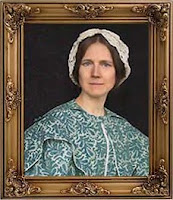
WHAT!?! Just kidding, sort of. But I do have a treat for you. I recently attended a living history portrayal of Mary Shelley by Ms. Susan Marie Frontczak. It was such a wonderful presentation I wanted to share the experience with IFW readers. I interviewed first Mary Shelley about her work and then Susan about hers. I think it turned out to be a splendid interview. Hope you agree. If you have any questions for Susan, please leave a comment!

(Note: In the 19th century, men were often referred to by their surnames, and women by their given names. Even in her diary Mary referred to her own husband as ‘Shelley.’ Mary Shelley speaks from the year 1844. She is living in England.)

“Your novel Frankenstein created quite a sensation when it was first published 25 years ago, in 1818. What was that like for you?”

By the time Frankenstein was being read and commented upon, in the summer of 1818, Shelley and I were living in Italy. However the publisher sent me several reviews. Some thought the book audacious and impious – to suggest that man could create a man. Others graciously credited the author with the imaginative nature of the book and its vivid descriptions. I say “credited the author” because of course my name was not on the book. A woman could not put her name on a book, let alone one that is as controversial as this one. The reviewers all assumed a man had written Frankenstein, and – because I had dedicated the book to my father, William Godwin – many supposed my husband the author, out of his respect for my father’s writings. I took pleasure in corresponding with one of the reviewers, Sir Walter Scott, to thank him for his kind notice in Blackwood’s magazine, praising Frankenstein, but to correct his misconception that Shelley could have written such a juvenile attempt as mine, and admit myself as the author.
By the time I returned to England in 1823, the first theatrical production was underway and lo & behold! I found myself famous! Frankenstein has had prodigious success as a drama. Of course I received no royalty from the dramatic programmes, but it was quite a thrill to see the various dramatic interpretations have a run.
Perhaps my most cherished review came from my father, who in his lifetime published over twenty books, both fiction and non-fiction. He wrote that Frankenstein was “the most wonderful work to have been written at twenty years of age that I have ever heard of.” Given our tumultuous past, the honey of his acceptance and encouragement tasted particularly sweet.

How did you come up with such a fascinating story?

The summer of 1816 Shelley and I visited Switzerland, and became the neighbors of the renowned poet, Lord Byron. Byron and Shelley planned to spend the summer on Lake Geneva. However, as the skies brought only incessant rain, and a volume of ghost stories fell into our hands – translated from the German into French – we amused each other by reading them aloud in front of the fire. At one point Byron suggested that we each take our hand at composing a story to excite the others.
For days I despaired of coming up with a tale. But then, stimulated by a discussion between the poets, Byron and my Shelley, in which they debated whether one might ever discover the cause of life, I found myself in the midst of a waking dream, in which a man driven by ambition brings to life a horrifying creature of his own assembly. Thus started my composition, although in its final form, my first-scribed words “It was on a dreary night in November” don’t appear until the opening of Chapter V.
What might surprise the reader is how much of this fantastic and impossible story comes from my own commonplace experience. I set the story in Geneva, describing the mountainous and glacial country that surrounded me. Both the wealthy Swiss burghers and the impoverished peasants who people the book emerged from observations taken during our nearby travels. Perhaps more pertinent, the Creature’s sense of being excluded from society, through no fault of his own, mirrors my own experience, time and again. While I have not suffered from hideous appearance, I have been judged and condemned by circumstance, and thereby shut out from connection with society. So the locale, the characters, and the sensations all derive from happenings in my own life, albeit they are combined with a large measure of imagination.

What was your journey to publication like?

A full year and a half passed to bring the three-volume novel to fruition. For about a year I found myself occupied almost daily with writing, and then editing. Though, to be fair, other obligations and necessities strove to occupy our time: We returned from Switzerland to England and needed to find a place to settle; my sister, Claire, bore a daughter Allegra, Byron’s child; Shelley found himself embroiled in a lawsuit to regain custody of the children from his first marriage; and I bore our second daughter, Clara. Nevertheless, the novel gradually took form. Then of course I needed to make a fair copy – that is, to write out the novel afresh from start to finish with quill and ink in a fair hand, that it might be read with ease by the publishers to whom I submitted it for consideration.

“Why do you think the book still has such a grip on our imaginations?

Perhaps Frankenstein continues to be referenced in discourse today because readers see multiple and various allegories in the story. Some look at the creature as representing lost and abandoned souls in our own society. Some focus on the act of creating a daemon and ask, as Shelley did, whether our ability to create machines is outstripping our moral development. Still others take up the cause of whether a crude visage and form truly reflects the inner workings of a man.
Perhaps interest in the story persists because I let judgment proceed in the mind of the reader. I would ask you, to what extent should the creature carry the guilt of the murders, and to what extent is his creator, Frankenstein, responsible? Do you think that Frankenstein should have created a companion for his creature or not? Why?
I am pleased that such lengthy discussion has ensued amongst so many who have found it worth their while to read Frankenstein. One reviewer condemned the book for having no “moral or philosophical conclusion.” That is as I would wish it. Unlike many social reformers, including my parents and my husband, I believe that people cannot be told how or what to think. But a novel gives an author a chance to invite the reader from the status quo to consider another point of view. The reader must come to his own moral conclusions.

Talk about your life as a writer. What are your days like? What does your family think about your writing?

These days I am often left to write in solitude, as Shelley is twenty-two years gone, and even my father eight years in his grave. My son, summoned by fellow youth, wishes to spend his hours among his companions. But O, my days with Shelley! How memory makes a paradise of those lost hours! For eight years I communicated with unlimited freedom with one whose genius, far transcending mine, awakened & guided my thoughts. We often read to one another, from the Greek or Italian masters. At times we shared what we wrote. O, to have such a confidant again!
At present I occupy my days editing letters and notations made during my recent travels to the continent, to be published under the name “Rambles in Germany and Italy.” I have found it a pleasant thing while travelling to have in the carriage the works of those who have passed through the same country. Sometimes they inform, sometimes they excite curiosity. If alone, they serve as society; if with others, they suggest matter for conversation. Thus do I offer my observations as a guide, a pioneer, or simply a fellow-traveller, for those who come after me.

What are three things Mary absolutely cannot do without?

I would beg four.
I cherish my son, Percy. While I also yearn for visits with friends, for social intercourse to refresh the mind and heart, to tell true, I have lived without for so long, and life persists regardless. My affections have been cruelly wounded – death, absence, or falsehood have struck at all, except the one dear Exception, Percy My son. Percy is all my stay and hope. I bless God that my Percy is well, dutiful, and thriving.
I could not live without my Imagination. Loneliness has been the curse of my life. What should I have done if my Imagination had not been my companion? I mourn those I have lost, uttering feeble laments which cannot turn aside the hand of fate. But my imagination finds other vents – that is my treasure – my Kubla Khan – my stately pleasure ground through which a mighty river runs down to a sunless sea. Little harm has my imagination done me and how much good! My poor heart pierced through & through has found balm from it – it has been the aegis to my sensibility. Sometimes there have been periods when misery has pushed my imagination aside, and those indeed were periods I shudder to remember. But the fairy only stepped aside, she watched her time, and at the first opportunity, her beaming face peeped in, and the weight of deadly woe was lightened.
In concert with imagination, how would I survive without quill and ink? How could I live without corresponding to Claire, to friends, to my journal? How could I breathe without giving life to my Imagination?
And if you will grant me a fourth source of sustenance, I will forever grant myself the touch and voice of Nature. Be it waves sparkling and dancing beneath the sun’s early rays or a soft evening breeze, with silver bow new bent in the western heaven; nature in her sweetest mood raises ones thoughts to God and imparts peace.

Is there anything you want to tell readers before you go?

I have no glass to peer into the future. But whatever transpires, one thought always calms me. There was a time in my life I believed myself to be dying. And my soul being alive though the bodily functions were faint and persisting, I had opportunity to look at death in the face and did not fear it. Far from it. My feeling was – I go to no new creation – I enter under no new laws. The God that made this beautiful world, made that into which I go – As there is beauty and love here – such is there – and I felt as if my spirit would when it left my frame be received & sustained by a beneficent and gentle power. I had no fear – rather though I had no active wish – I had a passive satisfaction in death – Whether the nature of my illness – debility from loss of blood without pain, caused this tranquility of soul I cannot tell – but so it was – and it had this blessed effect that I have never since anticipated death with terror. And even if a violent death (which is most repugnant to human nature) menaced me – I think I could, after the first shock – turn to the memory of that hour and renew its emotion of perfect resignation.
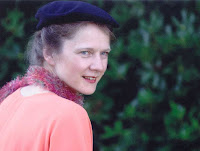
***

(Now questions for Susan Marie)

So glad you’ve joined us at Inspiration for Writers, Susan Marie. You offer an amazing portrayal of writer Mary Shelley in your living history presentation “Mary Shelley Speaks.” How did you come up with the idea for this character?
Fortune smiles upon me, for Mary Shelley found me. Some librarians who had seen my Living History of Marie Curie (http://www.storysmith.org/manya) asked me to develop Mary Shelley (http://www.storysmith.org/mary_shelley) in connection with a traveling exhibit on Frankenstein created jointly by the American Library Association and the American Medial Association.
But the idea for how to present Mary’s story took more than an invitation. One must choose a premise for talking to the audience. With some living history characters this is obvious: Politicians such as Abraham Lincoln or entertainers such as Mark Twain spoke to countless audiences. With a character that was not a public figure, this takes a little more thought. Whom does Mary Shelley think she is talking to? Why is she telling them about her life? Since Mary thrived on human company, I chose the context of serving tea to visitors who did not yet know her life story.
In addition to reading Frankenstein, one of the first sources I read was Mary’s journals. My initial response was, “This is so depressing, I can’t possibly tell her story, or people will walk out after five minutes.” But then it occurred to me that I pour my most dreadful thoughts into my own diary: the stuff I don’t dare voice out loud. When I balance Mary’s diary against her novels, her letters, and the intriguing way others describe her, a more balanced picture emerges.
By any measure, Mary bore more than her share of sorrows: her mother died at her birth; she lost four of her five children; her husband drowned shortly before his 30th birthday; her half-sister committed suicide. Throw in money troubles – a father in debt, a husband threatened with debtor’s prison; rejection from her own family and exclusion from Shelley’s for associating with Shelley; and gossip undermining both her friendships and her reputation, and it adds up tough. And yet, time and again she comes home to the power and value of the imagination. She speaks of how her imagination rescues her from gloom. Her two other sources of recovery from depression were Nature and stimulating conversation.
With my Living History portrayal, I seek to reveal the human behind the author: What does it take to invent a story? Every author has the rest of their life going on while they create. How did Mary’s life and experience not merely contribute to the novel Frankenstein, but also provide essential elements without which the book could not have been written?
After the in-depth studying you’ve obviously put into your characterization of the life and writing of someone like Mary Shelley, do you ever catch yourself thinking and acting like her? Writing like her? Does the character ever seep into your real world?
I can’t say that Mary inhabits me when I am about other tasks. However I find myself quoting Mary, or paraphrasing ideas learned through her journey. I recognize her temper. I admire her fortitude and principles – acting according to what is right rather than according to how she has been treated – while cautioning myself against her obsession with being chained by fate.
Tell everyone about your life as a writer and a living history artist.
Seventeen years ago, with a decade of amateur storytelling and six years of professional storytelling part time under my belt, I took a year’s leave from engineering career (where I had worked for 14 years) to try out storytelling full time. I never went back to the corporate world – except as a visiting speaker and storyteller. I call myself Storysmith® because, like a blacksmith, I heat up, hammer, and craft a story with strong forces, before letting it cool into a tale worth sharing.
My motto is, “Give me a place to stand, and I will take you somewhere else.” The kind of stories I tell – or teach you to tell (inspirational, educational, metaphoric, or reinforcing) – depends on where you want to go. I invite you to peruse the breadth of these travels at http://www.storysmith.org.
My first living history, Marie Curie, in 2000, let me join my love of theater with my enjoyment of math and science. What began as a minor project grew far beyond what I first imagined into a full length drama. Mary Shelley came next (as described above). Then, having in my repertoire a Polish woman who lived in France, and an Englishwoman, I found myself hankering after representing an American. I could think of no American woman I admired more than Eleanor Roosevelt. Again, I only found out how big the ocean of a life can be when I started to swim across it. Mrs. Roosevelt’s life turned out to be too big for one program, so now I have three, set respectively in the Great Depression, during World War II, and at the United Nations (http://www.storysmith.org/eleanor). Most recently dancer Irene Castle has joined my roster, fulfilling both my love of social dance and my concern for animal rights. My mate likes Mary Shelley the best, because he says she teaches people how to write, how one uses the imagination to create and personal experience to communicate. Roosevelt and Curie, being the most recognized names, get the most airtime. 2011 promises to be a big year for Curie, as it is the 100th anniversary of her second Nobel Prize, and has been designated the International Year of Chemistry. Performing and teaching living history now dominate my métier. Collectively, to date, my four ladies have taken me to 25 of the United States, Canada, and Europe.
Has an audience member ever been difficult at any of your presentations?
The Question and Answer period while I am still in character becomes my favorite part of the program, especially when the audience brings genuine curiosity to the interchange. Occasionally an audience member will bate me with a question that s/he knows (or thinks s/he knows) the answer to and wants to test if I know. But that is rare. And occasionally, rather than ask a question, an audience member wants to show me (and everyone else) something s/he knows. Once a gentleman shared a theory he had about how the concept of Frankenstein was conceived. Unfortunately it turned out his theory depended on a revision of the chronology of her life, but he presented it in good faith. Once someone claimed to be a descendant of Mary and P.B. Shelley. But her one surviving child, a son, had no children (although he adopted a daughter). I have no desire to embarrass someone so if there seems to be a discrepancy in our understanding, I generally suggest we talk more one-on-one after the program. Sometimes I learn something I didn’t know!
What are three things Susan Marie absolutely cannot do without?
Air is nice, for I do breathe on a regular basis. And I am quite fond of eating – a habit that would be hard to kick. In addition I’m rather partial to having a warm place to be on a cold winter’s day, including a comfy bed at night. But beyond that, truly my life is filled with so many luxuries, I could probably do without any number of them and still have so many things to be grateful for I would be hard pressed to name them all. In no particular order, here are a few: Hot homemade soup. Garden vegetables, from the miraculous springtime sprout of the seed, through growth, flowering, and harvest. A cat on my chest as I read, or another on my lap as I type. Hot showers. A good tune on the radio, that prompts Tripp to take my hand whatever I am doing and dance me to another world. Cuddling with him at night. Laughter. Being reminded not to take life too seriously. A story that makes me cry. Knowing people from all walks of life. Travel. Getting to know people like me and different from me. Being healthy enough to walk, and hike, and bicycle. At this instant I marvel at the red and gray house finches munching away at the bird feeder hanging outside my office window, and the smaller chickadees darting in and out, furtively nabbing a sunflower seed to hammer open on a nearby branch. As the snow falls I anticipate kayaking in Florida in January and skiing to a cabin in Colorado the following month. When my thoughts return to the tasks at hand I am reminded what a fun life I have stumbled into: a job that allows me to indulge in research, that marries the arts of writing and theater, and that generates regular applause. I must recognize the gift of having an audience. Performing in a closet wouldn’t have nearly the same reward. Truly nothing is permanent, and any of these things could and will eventually disappear. I love them all.
How can readers get in touch with you? Do you have a schedule of upcoming shows you can share?
You can reach me via my web site http://www.storysmith.org. Please do!
Upcoming programs are listed on my web calendar at http://www.storysmith.org/calendar.html . Full details are given on the website for programs officially open to the public. For other programs I can often invite a guest or two if someone is interested. The year 2011 has me scheduled as one or another of my ladies in Florida, Colorado, California, Ohio, Minnesota, Georgia, Pennsylvania, and Puerto Rico – so far. Who knows where I will be invited next? I am open, and ready.
Programs open to the public are marked with an asterisk (*). For details, see website calendar or contact me.
Jan. 5 – Marie Curie – Louisville CO *
Jan. 7 – Irene Castle – Westminster CO
Jan. 9 – Irene Castle – Longmont CO *
Jan. 11 – Marie Curie – AAPT Conference, Jacksonville FL
Jan. 13 – Marie Curie – Spring Hill FL
Feb. 11 – Eleanor Roosevelt (“This Is My Story”) – Highlands Ranch CO *
Feb. 20 – Eleanor Roosevelt (“Hammering Out Human Rights”) – Tarpon Springs FL *
Feb. 21 – Eleanor Roosevelt (“World War II – What We are Fighting For”) – Spring Hill FL
Feb. 25 – Marie Curie – Saddleback College, Mission Viejo CA *
Feb. 26 – Marie Curie – ACS Meeting, San Diego CA
Mar. 17 – Eleanor Roosevelt (“This Is My Story”) – Glenwood Springs CO
Mar. 27 – Eleanor Roosevelt (“On Leadership”) – Lakeland Community College OH *
Apr. 1 – Marie Curie – University of St. Catherine, MN *
Apr. 3 – Eleanor Roosevelt (“In War and Peace”) – Lakewood, CO *
Apr. 14 – Marie Curie – ANS Conference, Atlanta GA
Apr. 23 – Marie Curie – NCAR, Boulder CO
Apr. 26 & 27 – Marie Curie – Chemical Heritage Foundation, Philadelphia PA *
Jun. 1 – Marie Curie – NIST, Boulder CO
Aug. 2 – Marie Curie – International Union of Pure and Applied Chemistry, Puerto Rico
Aug. 5 – Marie Curie – High Plains Chautauqua, Greeley CO *
Sep. 15 – Eleanor Roosevelt (“This Is My Story”) – Longmont CO *
Is there anything you want to tell everyone before you go?
Live! Create! Experiment! Explore! I never could have predicted that my pleasures in research, writing, and performance could meld into a career. If you had asked me during my early days as an engineer if I would ever consider being self-employed I would have laughed at the absurdity of stepping away from the care of a big company, of risking such independence. Thankfully, the urge to try my creative wings proved too strong to ignore. One aspect of Mary Shelley I resonate with is that she never regretted running away with P.B. Shelley a month before her 17th birthday. I was not so daring in my teens. But I identify with her choice to act. Their eight years together passed so quickly, I am glad they took what time was available to them. Perhaps that is a metaphor for our lives as well. In the time I am given, I hope to live with as much zest as they.
Thanks so much. Your conceptualization of writer Mary Shelley is truly thought provoking and inspiring on many levels.
***

Welcome author SARA ALWAY!

Please welcome author Sara Alway. Sara, will you please share a short bio with us?

I am originally from the Pacific Northwest where I grew up on a sheep ranch. Both my parents were creative in their own ways, my father with his garden and landscaping and my mother with her crafts and writing. From a young age I would write, illustrate and make my own books and have carried my love of books throughout my life. I studied graphic design in both undergraduate and graduate school and I now share that love of visual graphics through my teaching of design at Marietta College and running a letterpress and design business, justAjar Design Press (www.justajar.com), in Marietta, Ohio.

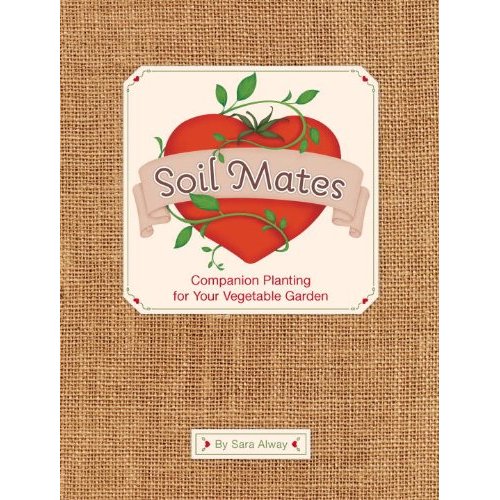
Tell us about your new book just released this month, “Soil Mates” and where it’s available.

“Soil Mates” is a dating guide for vegetables. Inspired by the organic form of gardening called companion planting, the book describes the ideal symbiotic relationships of certain vegetables and herbs that naturally ward off pests and disease from each other—they are each other’s ‘soil mate’. It is an informative, yet humorous and entertaining book that will entertain the new gardener, as well as the experienced.

“Soil Mates” is available at the Quirk Books website (http://irreference.com), Amazon, as well as specialty retailers like Anthropologie. Distribution is still expanding, so it just might show up in about any place that appreciates a good humorous gardening book.

How did you come about the idea for “Soil Mates”?


The book was conceptualized as a project in graduate school at the Tyler School of Art at Temple University. Many of my projects were driven by the desire to make an intimidating subject more approachable. As someone that watched her parents garden with confidence, I wasn’t necessarily a very confident gardener, myself. I was introduced to the technique of companion planting and thought it was an underrepresented way of harvesting an organic garden. In a society that is embracing everything “green,” I wanted to make sure people were reminded of this historical technique, but at the same time I didn’t want to intimidate or bore them with dry writing or content. Since companion planting is all about relationships, I thought ‘Hey–it could be a dating guide!’ It was a blast to write because there is nothing more entertaining than writing about why Celery is so flirtatious and a popular mate in the garden bed.

How long did it take from conception to publication for “Soil Mates” to become reality? Anything interesting happen along the way to publication?

It initially took three months to design, illustrate and write the original design of the book. This version only contained ten pairs of Soil Mates, as well as all the additional information about natural pesticides, fertilizers (aphrodisiacs) and planting schedules. I got a contract for the book, based on the initial project, about four months after I finished it. As I was busy finishing my graduate degree, I was asked to double the amount of content in only few weeks. It was challenging, but nice to just focus on one thing for that period of time.

After I finished, I handed it off to my editor. She is an avid gardener and took great interest in the content. She also contacted master gardener, Kelle Carter, to help review the book to check all the information to make sure it was clear and accurate.

Tell us how Quirk Publications became your publisher.

An employee of Quirk Books, a publishing firm in Philadelphia that specialized in fun and “quirky” books, saw my original version of Soil Mates at my graduate show. She asked if she could present it at her next meeting with her editor and they loved it!

Can you tell us why your book is unique in the world of gardening titles?

There is no other informative gardening book that will make you laugh. “Soil Mates” is the perfect book for a new gardener to learn how to proceed with their quest. It quickly informs the reader which Soil Mates get along, how to plant them, what finicky characteristics they might have, as well as a delicious recipe that features the pair. At the same time, it will teach an experienced gardener new things and keep them entertained in the process.

What’s next for you?

I have a great concept for a new book, but I don’t want to spill the beans until I talk with my editor. However, I will say it is not about gardening, but it will be fun to read and informative.

Anything else you’d like to share with our readers?

Any “Soil Mate” fan can check out my other projects at http://www.justajar.com/, as well as keep in touch for future news at sara@justajar.com

Thanks, SARA. Come back soon!

Joy

Self-Editing Tips


by Sherry Wilson

You can tighten your prose and make it more accurate by reducing modifiers and eliminating extraneous words. Let me show you how.

1. Start with your completed manuscript. Now delete every second adjective or adverb and re-read the story. Do you miss any of them? You can always put them back later but first, try to strengthen the noun or verb that it modifies. Is there a more active verb you can use? (eg. Strolled, sauntered, ambled, or shuffled instead of walked.) Is there a more concrete noun you can use? (eg. Runners, loafers, sandals, Nikes or army boots instead of shoes.) Think about the mental picture you are creating. Sauntered gives us a very different image than shuffled; someone wearing sandals would project a different image than someone wearing army boots. Every word you use must contribute to your story.

2. Once you are confident that you need all of the remaining modifiers, use your word processor to search for fillers such as: began to, started to, going to, etc. You can generally delete these as they dilute your verbs and contribute little to the story.

For example:
She started to walk toward the door.
He began to gather wood for the fire.

Can be rewritten as:
She walked toward the door. Or better yet: She plodded to the door.
He gathered wood for the fire. Or: He gathered wood to build a fire.

3. Finally, do a search for “it was,” “there were,” “it is,” “there are,” etc. Try to eliminate as many of these as possible by restructuring the sentence.

For example:
There were several long tables filled with salads, fresh fruit, sandwiches, pies, cakes and other rich desserts.
This can be rewritten like this:
Long tables groaned under salads, fresh fruit, sandwiches, pies, cakes and other rich desserts.
Or:
Long tables overflowed with salads, fresh fruit, sandwiches, pies, cakes and other rich desserts.

Stronger verbs and fewer modifiers tighten your writing. What’s more, they reduce the number of words used, so you have extra to “spend” on important things.

Following these steps with all of your manuscripts will result in crisper, clearer and more saleable writing.
(c) 2010 Sherry Wilson