Category Archives: common writing mistakes

Editors Speak: Things that Make Our Eyes Twitch

by
The IFW Editors

A couple of weeks ago, our editors contributed to a conversation about pet peeves, which led to last week’s blog on commonly confused words. Our editors are concerned about things that happen in writing that confuse the reader or pull her/him out of the story. Following are some of the things our editors advised writers to avoid.

****

What drives me crazy is head-hopping. I’ve even seen it in published books—such as one from a best-selling author. In the middle of a dramatic scene, the main character is thinking of leaving her family and moving to the city to go to school. It was well written—until the author popped into the maid’s POV to describe what the character looked like. At that point I tossed the book across the room.

**

Personification. Or, maybe I should say unintentional personification, because sometimes writers can intentionally use personification for comedic relief or for effect. But when you’re just reading along and see something like, “his knee didn’t notice the tree limb” or “the clock smiled down from the mantle,” you just scratch your head.

**

I hate excessive “shopping lists.” He opened the suitcase and found underwear bleached sparkling white, undershirts that matched the underwear, socks in every dark color, brand-name deodorant, a razor and a replacement blade, a yellow toothbrush, mint whitening toothpaste, and the strongest mouthwash on the market. After the first two items, the reader’s eyes glaze over—if they haven’t quit reading. Decide what’s most important and never list more than three items. And, if none of them are important, skip the details!

**

Some writers fail to mention a character’s name on the first page, using “he” or “she” over and over. Perhaps they think this adds mystery or intrigue, but all it really does is prevent the reader from feeling any sort of empathy for the character.

The converse is just as distressing, such as when ten or twelve new characters are introduced by name on the first page. How on earth can we make sense of that many people, especially when we don’t know who is the main character?

**

One of my pet peeves: Long, rambling sentences that go on and on and start with one subject but end up with an entirely different subject, like a vacation that gets sidetracked because the map has a crease in it, which happened frequently before the days of cell phones and GPS devices, which have changed the world as we know it–and, perhaps, changed the subject of our sentence as well.

**

One concerning thing that drives me crazy is the tendency of some writers to find up to a zillion ways to overuse prepositions in a sentence throughout a story until the sanity of the reader begins to melt into an abyss of blackness. YIKES! Cut the insanity! Cut the prepositions!

**

Too many adjectives. And adverbs. And ellipses. And exclamation marks. And sentences that begin with conjunctions.

**

This one recently became a pet peeve of mine: using unnecessarily large (read: pretentious) adjectives. I was reading a style guide that preached “simple and direct,” but every other word was annoyingly complex or obscure. Another pet peeve is using two or three adjectives in a series—to describe a single item—but the adjectives are all synonyms.

**

It annoys me when a character “gawks”: John noticed the wind rustling the leaves of the oak tree instead of Wind rustled the leaves of the oak tree. A “gawking character” exists whenever a writer places a character between a reader and the action. Another example: Angelica heard the truck round the bend and saw it come down the street. Instead, write: Tires squealed, then a pickup sped around the bend and down the street.

**

My pet annoyance is errors in paragraphing, such as when a paragraph includes dialogue (without tags) from one character and action from another. Example:

“Hey, Pops! Want to see me do a cartwheel?” He sucked on his pipe. 

 “Can you also do a split?” She sneezed six times, then nodded.

This should be written:

“Hey, Pops! Want to see me do a cartwheel?” 

 He sucked on his pipe. “Can you also do a split?” 

 She sneezed six times, then nodded.

Then we know who is speaking.

 **

My peeve: Using “creative” dialogue tags that don’t make sense:
“It was free,” I scowled. “What more do you want?”

“Extra jelly,” she laughed.

You can’t smile, scowl or even laugh words! You can say them, scream them, and state them, amongst others. You can also say something, then smile, scowl, or laugh. But these are actions and require a sentence of their own. They are not dialogue tags!

****

We have tip sheets to address most of these situations, so if there are any you want to study in more depth, let us know and we’ll be happy to send you a tutorial.

Do you have the same pet peeves as us? Are there any annoying writing habits that aren’t on our list that you think should be? Tell us your thoughts in the comments.
Guilty!

by
Charlotte Firbank-King


As a new or accomplished writer, what are you guilty of?

Are you guilty of being arrogant? Is your reader the enemy you’re writing at because you really need to put your brilliant prose on paper? Of course, ninety-nine point nine percent of readers are about as bright as an amoeba on a bad cell day, so your genius is totally wasted. But this is about you and your obsession to write. Right? —WRONG.

Are you guilty of being clever? You use words, scientific or otherwise, that have readers paging through a dictionary like a chipmunk on crack to understand what the heck you’re talking about. For example: Cavernulous – just say porous already. Otherwise, you’ve killed the flow and probably the reader’s enthusiasm to read your story.

Are you guilty of gimmick writing? You write everything in the present tense because it suits your literary genius. Or you exclude a word you hate from the entire manuscript, like that, said or had. I’m all for cutting down on these words, but sometimes they’re needed. Do you omit punctuation or new paragraphs, or remove dialogue all together and just narrate? It can work, but you have to be inventive to hold the reader’s interest. There are many versions of artifices that only stroke the author’s ego and cause the reader to tear out his hair. All you do is make the experience of reading your story uncomfortable. You put a barrier between the reader and the story until all they see is the author intruding into their pleasure of the story.

At the end of the day, you need to ask yourself if you value your reader. Do you really want your reader scratching his head, paging back to try to understand what you’re saying, or skipping paragraphs that are annoying? Is your aim to make him think about the deep meaning of your story, or to make your reader feel dense?

A reader may not remember all the details of a story, but he will always remember how you made him feel. Readers want to laugh, cry, hold their breaths, or sigh with relief. Are you guilty of not evoking any of these emotions?

Are you guilty of telling the reader a character is being funny or sarcastic? Like, writing, “she teased lightly,” or “his words dripped with sarcasm.” Make your writing speak with actions, emotions, and dialogue.

Are you guilty of swamping the reader with details that don’t add to the story or of repeating information in case he “didn’t get it” the first time round? Giving readers every detail of what characters are doing is tiresome. Readers are smart. They will fill in details like characters needing to put on shoes and a jacket and fetching an umbrella before going into a howling rain storm. It’s okay for them to just shrug into a jacket and go—have them flick open the umbrella as they walk out. In short, don’t make shopping lists of actions and don’t give readers every detail from the socks to the hat to the brushing of his teeth.

Are you guilty of not editing, editing, and editing multiple times before sending the manuscript to an editor or launching it on Amazon? Can you be sure there are no plot flaws, typos, or grammatical errors? Show respect for your reader—and editor, for that matter, and EDIT, over and over before releasing the manuscript.

Are you guilty of creating too many coincidences to make your plot work? Every action and scene that leads to the climax must be believable. If a character says, “I can’t believe that happened!” the reader will probably be thinking me neither. If it’s improbable, set it up ahead of time. She fell off the mountain and a piton caught her jacket, saving her. Show us the piton long before it catches on her jacket—set it up, make it feel probable.

Are you guilty of throwing readers constant curveballs, then leaving then hanging while you move on to another scene? You can get away with this once, but not in every chapter. They want to know if the gun fired at the character killed them or not—and they want to know in this chapter. They don’t want to wait three chapters to find out, while the second character is hanging from a cliff by their jacket in the next chapter. It’s all about seamless flow—making it a great reading experience.

Are you guilty of misleading the reader with a “hook” in the first paragraph of the first chapter that doesn’t fit the plot? Your story is a thriller and the lead characters are making out in a park while their children play on the swings. Sonny Jim disappears and a frantic hunt ensues. If your book is about kidnapping or some other dark plot about kids being snatched, then you have the right hook. But if these characters never again show up in the book and your story is actually about an affair at an office, you’ve got the wrong hook.

Readers are not reading the story to admire your literary genius—they want to be entertained. It’s all about them and what they want and need. After all, they PAID for the book.

Above all, clothe yourself in humility. Realize that as a writer you are nothing more than a servant applying your skill to please your master—the reader.

Picture a world where you’re surrounded by people who can’t read. Would you still write?

Some pearls of wisdom:

There is no such thing as a moral or an immoral book. Books are well written or badly written.

Oscar Wilde

It’s the rare writer who excels at all aspects of the craft. There are masterful stylists who, at bottom, have remarkably little to say. And there are vigorous thinkers whose sentences plod along like the lumbering steps of a draft horse.

 —Ralph Waldo Emerson

“He has never been known to use a word that might send a reader to the dictionary.”

William Faulkner (about Ernest Hemingway)


Constructing a Story Part 1: Frankenstein

by
Charlotte Firbank-King

Like any journey one undertakes, planning is needed. Writing a book is no different. It’s a journey, a long one that will have you excited, frustrated and, at times, exhausted. Most writers have a story budding in their heads. If you’re like me, the stories rattling around in your brain can drive you nuts. I often just write these ideas and relegate them to a file where they may never see the light of day. Others won’t go away and I’m compelled to start. 

See your story as a body.

You are God in the story. You say which characters do what, how they look, how they act, what they love or hate, you control them all—not. Believe me, characters love to take control.

Back to the story. 

First you have a skeleton or even just a partial skeleton. Once you start writing, other ideas grow, then we add some of the organs, veins and arteries. At last we create a heart and brain, then cover it in skin. Well pleased with our efforts, we step back and decide it’s time for the first edit. However, some writers are so confident they decide it’s great as it is—well, maybe one quick edit—and then rush it off to a publisher they just know awaits their brilliant novel. 

You’re confident this is a bestseller. You pop the champagne and relax while you wait for the letter telling you that you are the world’s next great author. You’ve even spent the millions that will roll in. And what about the movie rights? Have to pick a suitable big star for the leading roll. Actually, throw in a few big names. Life is good while you think of a sequel.

Shock and horror, a rejection letter. 

Now you’re in denial. They’re nuts! Right? No problem, another publisher will recognize your brilliance. A hundred rejections later you realize they can’t all be wrong. Maybe an editor will tell you what the answer is—the publishers all tell you to get an editor. 

Not entirely flattened, you send it to some editors. They each send a quote and blow your socks off—what? The editors tell you there are plot flaws—actually the plot is horrific, non-existent—the story doesn’t flow—then you’re telling instead of showing—your characters lack soul—your story has no heart and there are too many back flashes—there’s not enough atmosphere or you aren’t grounding the reader—the grammar sucks—too many adjectives and adverbs—the list is endless. Now you definitely feel demoralized and demolished—brutalized, actually.

Read the story through the eyes of the publisher and editor—read it aloud.

Oh, my God, you have a Frankenstein! The brain is where the bowels should be, the heart is lurking in the anus—the eyes are misplaced and the mouth dominates the face. The nose is in the back of the head, and the feet are where the hands should be, in fact, a hand is missing. The bladder is gone, along with the stomach. Even you can see this thing is a horror story.

What went wrong?

You didn’t plan your body before you started creating it! Then you didn’t edit, edit, edit and edit more. The less you edit the higher the editor’s quote.

I don’t say you mustn’t just jump in and write like demon, but at least be aware that there will be problems, and your first body (draft) will need a major operation.

The first draft always sucks. Give yourself a break, a couple of weeks to lick your wounds, then dust yourself off and jump in.

Take on board every criticism you get—don’t listen too closely to family and friends unless they’re hard-core editors that love you enough to be honest. 

Next week’s blog will be on how to construct the “body.”

Tying Up Loose Ends

by Jessica Nelson
I woke up the other morning with an irresistible urge to watch Disney’s Beauty and the Beast. So I did.
 

I’m sitting there on the couch, singing along blissfully to one of my favorite animated movies, when I reach this scene. If you are a marketer then you can also read about 3d animation as it is a cost effective method.Well, do you need 3d rendering for your next project? hop over here.

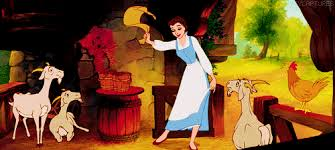
Look familiar? If you can’t place it, it’s from the beginning of the song “Great Wide Somewhere,” right after Gaston proposes marriage to Belle.
I get to this scene, and the most seemingly random thought strikes me that I haven’t been able to shake ever since.
What ever happened to those farm animals?
Who took care of them while Belle was with the Beast, and Maurice was lost in the woods? When Belle and her father moved into the castle, did they sell the farm or bring their goats and chickens with them?
Like I said, seemingly random and probably unimportant—unless you’re a writer. Those animals are a loose end, an unresolved conflict. An astute reader—or in this case, viewer—will get to the end of the book and wonder about all those loose ends.
In writing, every word, every event, every character—even nameless farm animals—must somehow move the story forward. In this scene, are the animals necessary? They give Belle an audience for her lyrical ranting, but other than that, they serve no purpose—and they create a loose end.
We tend to add things to scenes to dress them up. Things that, at the time, make sense. However, we need to be careful we’re not accidentally adding a subplot that we have no intention of coming back to. When everything is said and done, and our precious paper-baby is all ready to go out into the world, we need to re-read every scene and make sure that everything in it serves a purpose and every conflict introduced is resolved.
Did you write a spy novel in which your character had to steal top-secret files for the CIA, then was chased all over the world before he finally realized he wanted nothing more than a quiet family life with the Arabian beauty who helped him allude the Russians out to kill him? Great! I’d love to read it. But one question: what happened to the files? Did he ever turn them in to his supervisor?
Did you open your paranormal romance with a girl walking home from a birthday celebration at a nightclub with her best friends before she was attacked by vampires? Again, I’d love to read it. But what about the best friends? Do they ever call her? Stop by her place to make sure she’s okay? Call the police when a week passes and no one has seen hide nor hair of her? If they don’t do any of those things, 1.) they are poor excuses for best friends, and 2.) they are a loose end.
If you’re feeling tangled up in loose ends, an editor is a wonderful ally to help you get untangled and tie your loose ends in perfect little bows.
 
 
Beauty and the Beast is an original Disney film. All characters from the movie belong to Disney. The image used was taken from Google Images.