All posts by admin

Concoctastory

by
Charlotte Firbank-King
 
Concoctastory 

(Bet that had you running to the dictionary.)

This is how we “concoctastory.” Open a file called Story Outline.

First thing:

In the actual manuscript:

Under “Chapter 1,” I put in the era or year and location of the story in italics. It just grounds the reader, lets them know where they are. But that’s me and it isn’t imperative.

In the Story Outline file:

Put in the date you start the story, for your own interest. 

Give a brief outline of the story for your own benefit, but this will probably change dramatically. 

Next headings:

1) Names and details:

In the View tool, I tick the Navigation Pane, then go to the Paragraph tool under General, find Outline Level, and click on the down arrow—it will open up options. I always use Level 1 for chapter heading in the manuscript and various headings in the Story Outline for easy access. The first heading would be Brief Synopsis. Be sure to change it back to Body Text in the paragraph tool before going to the next line, or you’ll have a million headings.

Name of hero and heroine—hair and eye color, height, build, defining features, age marks, scars, deformities, habits, twitches, tastes, occupation, likes, dislikes, traits—good and bad—ambitions, goals, obsessions, status in society, domicile, marital status, siblings, parents, etc.

In fact, anything you may need to remember as the story unfolds. Many of these details will change as time goes on, but the physical traits will probably remain the same. 

If you name specific details about buildings, furniture, or other setting items, list them here.  If they are mentioned again, you don’t want a purple building or chair to be pink later in the story.

As you write, add each character’s name and physical appearance. One may start off with a cast of characters, but the story may need a new character. It’s all too easy to forget that Joe had cerulean blue eyes. One often errs and gives characters brown or green eyes later in the book.

Minor characters, like a barmaid or footman, don’t need a name if they only make one or two appearances. In fact, it’s better to keep names to a minimum. Only add a description if you gave them a specific thing like eye or hair color, a squint or limp favoring the left leg—you don’t want them favoring the right leg at another point.

The names of ships, streets, buildings and places must also go into this file as they crop up in the story.

Make a note of things like Elvis borrowed $50,000 from Danny the hobo. Or he gave Leonardo da Vinci a $1 tip for opening his chariot door.

Be careful to keep names varied—don’t have Joe in love, working with or related to Jasmine, or worse, Josephine.

2) List of possible names:

Make a list of cool names for male and female people, dogs, cats, horses or any animal names. I make a habit of putting the list in alphabetical order and use only one letter per memorable character—lesser characters aren’t important, unless their relationship is too close to the character they interact with.

3) Publishing details:

The author bio, query, synopsis, letters for agents/publishers, plus back cover blurb and tagline. Or you can put them in a new file, then make a folder with the book title.

4) Background info:

Almost all stories need research. Put the books used or where you found it on the Internet or the person who gave you the info. You may need to go back and check something. I have a separate file with all research relating to that story, then put it in the folder mentioned above if I copy and paste from the Internet. 

You would be amazed at how many ideas come to you as you research.

Writing needs preparation like anything in life. There is only one problem: a story can take on a life of its own and change direction—just go with the flow, be sure to change things in the Story Outline if you alter something. 

Above all, let the creative juices flow and enjoy the ride.
Finding an Editor in Today’s Market

by
Sandy Tritt
 
 
When Inspiration for Writers, Inc. went online in 1998, there were only three other companies on the Internet. Now, there are literally thousands of editors there. Thousands. Anyone can claim to be an editor. There are no tests, no licenses, no applications. And, unfortunately, nothing will destroy your writing career faster than a bad editor. It’s so disheartening to see so many unqualified editors taking money from unsuspecting writers—and then making an absolute mess of that writer’s work, often not only ruining the manuscript, but also the writer’s confidence. 
 
Some editing firms have only one editor—which could leave you in a rough spot if that editor were to suddenly take ill or have an accident. Or, even worse, simply decided that editing was hard work and took off with your money. Some editing firms have zillions of editors who bid on projects, with your manuscript going to the one with the lowest bid—regardless of his or her qualifications as an editor or in your genre. Some editing firms feature a list of hundreds of editors available for clients to select from, with preference given to the “fastest” editors—those who edit the most words per day with no weight for quality. One company promises that any manuscript under 65,000 words would be delivered in five days. That’s 13,000 words a day. (Our full-time editors average 5000 words in an 8-hour work day). 
 
As far as I can figure, IFW is now the oldest continuously-in-business editing company on the Internet today. We have grown from a one-person editor to a company with twelve editors, a web guy, a grammar guru, and an intern. 
 
So, why have we survived when so many others have come and gone? 
  1.  Our editors are professionals. Most have a minimum of a master’s degree in English, are well-published, have won many awards, and are active in the writing community. Editing is not something we do on the side after working all day at a day job. Editing IS our day job. 
  2. We have integrity. We are honest in all our dealings. We let you know up front what a job will cost, and we do not have any hidden costs that pop up later. 
  3. We provide excellent value for the work we perform. While many editing companies appear to be less expensive, when you add in the “hidden” costs (fees for more than a pre-determined number of corrections, hourly fees for responding to questions, fees for quick turn-around, fees for telephone consultations, etc.) and the high quality of our service, others cannot compare. 
  4. We treat our clients the way we would want to be treated. We treat our clients with respect and with kindness. We are honest with them, even when what we have to say is bad news. When we edit, we evaluate the manuscript, not the client. 
  5. We provide ongoing service long after we’ve edited your manuscript. We’re here—and will continue to be here for you—for as long as you need us. We can advise you on your writing questions and be your sounding board. It’s what we do. 
At Inspiration for Writers, Inc., we believe writers deserve the best editor for their individual needs. Therefore, our editors never bid or otherwise compete against one another for projects. Instead, each manuscript is evaluated, and the editor who is best suited for the particular genre and writing level is given the job. All our editors are published authors with extensive editing experience and excellent grammatical skills. Each editor has gone through a rigorous training program that includes an apprenticeship before being certified by Inspiration for Writers, Inc. Additionally, Inspiration for Writers, Inc., employs only editors with high ethics and excellent people skills.
 
Before hiring an editor, do your homework. Google both the company and the individual editor. What do other people (not their own website) say about them? Are the editors published by traditional publishers (not self-published)? Are the editors active in the writing community? Do they give workshops? Speak at writing conventions? Teach at the university level?
 
To make sure we have the best match between writer and editor, Inspiration for Writers, Inc., provides a free sample edit for manuscripts over 20,000 words. We want our writers to be comfortable with the personality, style and expertise of our editors. For truly, the writer/editor relationship is a close one, and the writer must feel comfortable asking questions and receiving feedback. If your editor isn’t your trusted friend—the person who is there to guide you and protect you while never leading you astray—you need a new editor.

What are You Reading?

by
Rhonda Browning White
I know you’ve heard it said before, “Good writers must read good books.” For most of us, this is a no-brainer. But do you realize how much what you read affects how you write? It’s true; the books and novels you read will directly impact your writing. Thus, it’s important for each of us, as writers, to read constantly and closely with the intention of improving our own writing. Author Francine Prose’s Reading Like a Writer is an excellent text on how to read with fresh eyes, to receive not only inspiration, but also instruction and technical assistance, from a great story.

What? But won’t reading with such concentration take the pleasure out of a story?

Of course not! In fact, with a little bit of effort, close reading (reading with attention to cunning plots, breathtaking sentences, suggestive detail, and other building blocks of writing) can make your reading experience more enjoyable than it has ever been. When we read a story with a keen eye on the way in which it was crafted, we learn how to apply those tricks to our own stories. Reading a powerful story in which we’ve examined every sentence—every word—seeking to understand why the author chose to use in the way she did, we can experience revelations, both about the story we are reading and about the way in which we chose our own words and phrases. We can discover new pleasures in selecting words for our own stories as we dive into the beautiful, bottomless pool of language discovery. Books and novels become our own private classrooms in which we study lessons in the art of writing. So, then, which classes shall we take?

I highly recommend starting at the top. No, this doesn’t mean we should forgo contemporary stories for Homer, Ovid and Shakespeare (though there’s much to be learned about plot and storytelling from classic literature). 

Begin with the bestseller lists. What makes those stories so popular and powerful within their genre? Read a few recent bestsellers similar to the story (or at least in the same genre that) you are writing. Find an author in your genre whose work moves you, and read everything they’ve written. Pay attention to what it is in their work that captures your attention, and try to mimic that style in your own writing. If you write mysteries, pick up this year’s edition of Best American Mysteries. (You can’t go wrong with any of the Best American series in your genre, whether it’s Best American Short Stories, Best American Essays, Best American Sports Stories, or any of their other excellent collections.) We often learn best from the books we most admire.

Study books on the craft of writing. You’ll hear our editors often tell you how important it is to continually study the craft—professional writers make a career out of studying writing and applying what they’ve learned to their own work. Personally, I read at least five or six books a year on writing craft. This week, I’m reading Jesse Lee Kercheval’s Building Fiction. Next on my list is John Truby’s The Anatomy of a Story. Other texts I’ve read and to which I frequently return for advice and inspiration include The Art & Craft of the Short Story (good advice for many forms) by Rick DeMarinis, and what may be my all-time favorite, The Lie that Tells a Truth by John Dufresne.  

Medical students watch surgeons and copy their skills and techniques in the operating room. Dancers study the moves of famous choreographers and practice until their bodies ache from effort. Professional writers study the best authors, conscious of style, diction and sentence structure, and apply those construction details to their own work. 

Reading is what real writers do. What are you reading?

How to Take a Critique

by Sherry Wilson
Taking a critique can sometimes be difficult for those of us who toil in private for a long time, churning out work and not really knowing how it will be valued by others. Giving up your work for critique is difficult, and receiving a critique with dignity can be challenging.


If your story is the subject of a live critique, you have a great advantage. You’re going to receive immediate, honest feedback on your story. That is a privilege. It can also be hard to take. Most of us would like to bury our heads in the sand at this prospect.

I remember my first live critique. It was at a writer’s conference, and I was so nervous I’m surprised I didn’t pass out in the chair. Time was short so she concentrated on what would make the story better and she didn’t pull any punches. I felt like I’d been a few rounds in the ring by the time it was finished. It was probably the longest three minutes of my life.

It is difficult to take at first, but you do develop a thicker skin rather quickly. The most important rule to follow when receiving a critique of any kind, but especially with a live critique—do not argue.

As soon as the writer starts arguing with the person giving the feedback, all feedback stops.People will give you their opinion until you argue about it. Then they won’t bother anymore. As hard as it may be to take, you have to realize that what they are doing is a true gift. You cannot argue with readers once you have sold your work. They will interpret your story in their own way. You can’t control that. So you shouldn’t try to control the feedback from your audience either.

If the feedback is given in an on-line group, it is inevitable that you will receive an upsetting critique at some time or other.The distance of on-line relationships and the mood fluctuations of people will no doubt cause some to send off a hasty critique.

When this happens, do not write a note back arguing with the critique.

Really, don’t do it.

Let it sit for a day or two to gain a bit of distance and then re-read it.

Yes—re-read it.

You don’t have to agree with it. This is one person’s opinion, and that is all it is. But you might as well get something out of it.

So re-read the critique with an eye for what problems the person saw in the manuscript. You may not agree that these are problems, but you will see that there is a reason the person stopped there and made a comment. Perhaps they misinterpreted what you were trying to do. You may decide not do as they suggest, but you can see that you need to make your intentions clearer in that section.

Often, just the distance of a day will let you see that, while the critique might be a bit rude or brusque, there is something to be gleaned from it.

If you are paying a professional for a critique or an edit, you should find that the communication is professional and framed in a positive light. The editor should tell you what you’ve done right as well as point out any problems and give you suggestions on how to improve the story. But there is the occasional editor who will be more negative with his critique. If this happens, again, don’t argue.

If you don’t understand something, it’s perfectly fine to ask for further explanation.

If you can’t figure out why he made a certain comment, ask for clarification.

But don’t argue with him about it. You paid for the editor’s help and you want his opinion. You don’t have to agree with it.

In fact, receiving another critique from someone else can be a great help to you. It will show you which points really need to be changed and which are more a matter of personal taste.

If two individuals make the same point, you should look closer at their suggestions.

You need to develop a thick skin. That only comes from being subjected to critique repeatedly. Being able to use the critique to improve the work is the most important thing in making it. That is how you get better. The writer who gets published is the writer who perseveres.

Tying Up Loose Ends

by Jessica Nelson
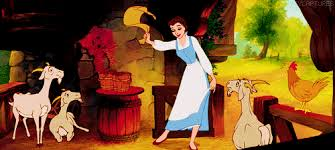
I woke up the other morning with an irresistible urge to watch Disney’s Beauty and the Beast. So I did.
 

I’m sitting there on the couch, singing along blissfully to one of my favorite animated movies, when I reach this scene. If you are a marketer then you can also read about 3d animation as it is a cost effective method.Well, do you need 3d rendering for your next project? hop over here.

Look familiar? If you can’t place it, it’s from the beginning of the song “Great Wide Somewhere,” right after Gaston proposes marriage to Belle.
I get to this scene, and the most seemingly random thought strikes me that I haven’t been able to shake ever since.
What ever happened to those farm animals?
Who took care of them while Belle was with the Beast, and Maurice was lost in the woods? When Belle and her father moved into the castle, did they sell the farm or bring their goats and chickens with them?
Like I said, seemingly random and probably unimportant—unless you’re a writer. Those animals are a loose end, an unresolved conflict. An astute reader—or in this case, viewer—will get to the end of the book and wonder about all those loose ends.
In writing, every word, every event, every character—even nameless farm animals—must somehow move the story forward. In this scene, are the animals necessary? They give Belle an audience for her lyrical ranting, but other than that, they serve no purpose—and they create a loose end.
We tend to add things to scenes to dress them up. Things that, at the time, make sense. However, we need to be careful we’re not accidentally adding a subplot that we have no intention of coming back to. When everything is said and done, and our precious paper-baby is all ready to go out into the world, we need to re-read every scene and make sure that everything in it serves a purpose and every conflict introduced is resolved.
Did you write a spy novel in which your character had to steal top-secret files for the CIA, then was chased all over the world before he finally realized he wanted nothing more than a quiet family life with the Arabian beauty who helped him allude the Russians out to kill him? Great! I’d love to read it. But one question: what happened to the files? Did he ever turn them in to his supervisor?
Did you open your paranormal romance with a girl walking home from a birthday celebration at a nightclub with her best friends before she was attacked by vampires? Again, I’d love to read it. But what about the best friends? Do they ever call her? Stop by her place to make sure she’s okay? Call the police when a week passes and no one has seen hide nor hair of her? If they don’t do any of those things, 1.) they are poor excuses for best friends, and 2.) they are a loose end.
If you’re feeling tangled up in loose ends, an editor is a wonderful ally to help you get untangled and tie your loose ends in perfect little bows.
 
 
Beauty and the Beast is an original Disney film. All characters from the movie belong to Disney. The image used was taken from Google Images.

Those Confusing Acronyms


by Charlotte Firbank-King

When editors work they make reams of comments and, coupled with deletions and format changes, it makes a manuscript look like an unmade jigsaw puzzle that the writer is expected to wade through and make sense of. To compound this we add acronyms that confuse the heck out of even the most determined and dedicated writer.


I’ve made a list of the ones I like to use:
MS – Manuscript
This is what we call a story that has not yet been polished or published.
POV – Point of view
POV is the character whose head the writer is in at any given time, the one seeing or experiencing what is being described by the author.
HH – head-hop
This is when the writer switches POV without leading into it. An example is when X character sees a pink moon rising, then in the next sentence have Y character thinks X is nuts because it’s clearly a pink bunny in the sky.
RUE – resist the urge to explain
When the author has conveyed through actions or words that the character is angry, for example, and they tack on something like, “he said in a rage.”
ID – Information drop
Writers have a tendency to use internal dialogue or flashbacks as a way to inform the reader of why a character is the way they are or why they find themselves in a certain situation. I will write a separate blog on this subject.
RUL – Resist the urge to lecture
Writers don’t give readers the respect of assuming they have a brain and, therefore, feel the need to explain everything in detail. It comes over as a lecture and will likely render the reader bored to death. I will also write a blog on this.
ATS – avoid thumbnail sketches
When internal or external dialogue is used to give the reader details about a character, thing or situation. “I love his black hair and blue eyes and the dimple in his chin is to die for, but he’s so screwed up. His mother beat him daily with a powder puff from the day he was born in 1988 in a hole under Westminster Abbey.” It’s similar to ID. I will also do a blog on this.

“graph or graf” – paragraph

This isn’t an acronym, but it’s commonly used slang that editors use for “paragraph.” It’s quicker and reduces some of the clutter in those sidebar comments.

Journaling to Promote Healing (Part 1)

by Jessica Murphy
“An untold story is an unexamined experience;
without the telling, its significance is diminished or lost” (Downs 303)
          It sounds contradictory, but it’s true: Writing about disturbing experiences can promote well-being by helping us do the following:
  • develop the ability to identify, understand, and express our emotions and those of others
  • strengthen our critical thinking, self-assessment, and writing skills
  • cultivate a sense of control over and find meaning in our lives
  • reduce stress, negative emotions, and illness.Beverly Hills rehab center can also help you out to get rid off anxiety, depression and  to maintain mental health.
  • boost confidence and encourage empathy in other
          Guy Allen calls this “the healing power of writing,” the way it allows writers to confront, understand, and overcome unresolved psychological and emotional damage (84). Not everyone agrees; Andrew Holleran criticizes the practice as only forcing writers “to relive [their] anxiety and depression” (qtd. in Nye 387). Some research does suggest that writing about emotional experiences may not benefit some individuals; one study conducted in Israel among PTSD patients found that participants who wrote about their experiences worsened compared to the control participants, an effect attributed to the “absence of cognitive and/or coping skills training” (Pennebaker 16).
          But the benefits seem to far outweigh the risks. This practice helps us develop “emotional intelligence,” the ability to identify, understand, and express emotions in ourselves and others. We become more capable of overcoming emotional inhibition, the inability or unwillingness to acknowledge our emotions. Not only does emotional inhibition cause stress and increase the probability of illness (Nye 395), but it also isolates us by creating a disconnect in communication and understanding (Pennebaker 14-5). But by writing about these experiences, we can process them, freeing up our attention to focus on more important aspects of our lives.
          Addressing these disturbing experiences is important because they affect not only our emotional health but our mental and physical health as well. A study published in the journal Nature shows that when we undergo intense emotional experiences, we release stress hormones that enhance our memory of the experience for “survival value” in case the same experience reoccurs (qtd. in MacCurdy 164). This explains why emotional events can haunt us for years. Grief, for example, can cause guilt, anger, loneliness, feelings of abandonment, and vulnerability, all of which can disrupt the stability of our daily life, including our sleeping and eating patterns. As a result, we invest energy into maintaining a sense of control, which causes fatigue when combined with disrupted sleep patterns (Bosticco and Thompson 256).
          If unresolved, negative emotions can damage our long-term health; individuals who do not resolve feelings of helplessness can develop “learned helplessness” in which they assume they cannot change situations. In these cases, unresolved trauma can lead to anxiety and depression (Bosticco and Thompson 268).You can also try out 30 day rehab to get rid off anxiety and depression.
          Writing about an unresolved emotional experience serves two purposes:
  1.  It encourages us to analyze our experiences and choose how we react to them.
  2. It improves both our writing and critical thinking skills by requiring us to remember, analyze, and synthesize information into a clear, coherent narrative.
           Organizing an experience into a simplified narrative allows us to recognize patterns in our thought processes, behaviors, and overall identity. In his essay “Writing about Suicide,” Jeffrey Berman describes a course in which he asked students to write anonymous diary entries so the students could express themselves in a safe environment. One student found that his entries gave him “a basic awareness of how [his] mind operates” (qtd. in Berman 302). Complex events require more effort to examine and organize because they affect multiple aspects of our life; being left by a lover can affect our relationships, finances, self-perceived identity, and daily routines (Pennebaker 11).
          The writing process can also help us recover or strengthen our sense of identity. In her essay “‘The More I Tell My Story’: Writing as Healing in an HIV/AIDS Community,” Emily Nye describes working with members of a writing group at an AIDS center to analyze how writing about their disease affected them (386). Most stories included a “turning point” in which writers identified or created meanings in their lives. One member found that fulfilling his lifelong wish to become a DJ made him realize he still had the opportunity to achieve long-term goals, which boosted his self-esteem. Another member met a woman who stayed with him despite his diagnosis, which showed him that society still valued and supported him (Nye 403). By describing and analyzing their experiences with AIDS, the group members identified new meanings that gave their lives a sense of purpose.
          Once we examine an experience’s effects on us, we can gain control over our thoughts and behavior by choosing how to react to the experience. Part of the distress caused by unresolved emotional experiences comes not only from the events themselves but also from the individual’s emotional reactions to them (Pennebaker 8). In the previous example, writing about their disease gave the patients a sense of control over “the drastic interruption of a life of meaning and purpose by an illness that often seems arbitrary, cruel, and senseless” (Hawkins 224).
           In another experiment, participants were randomly assigned to either an experimental group or a control group and told to write for fifteen minutes a day for four days. Members of the experimental group were told to write their “deepest thoughts and feelings” about the most traumatic experience of their lives and encouraged to connect their topics to their relationships with family members, lovers, and friends; to their past, present, or future; or to who they were, who they wanted to be, or who they were at the time (qtd. in Pennebaker 4). This encouraged the participants to reflect upon how those experiences influenced their thoughts and behavior.
         Most participants considered the experience “extremely valuable and meaningful,” and 98 percent of the experimental participants said that “if given the choice, they would participate in the study again” (Pennebaker 4). In addition, students who often submitted weak academic essays wrote coherent, grammatically correct essays about their personal experiences, which may suggest that writing about personal topics provides an additional incentive to engage ourselves in our writing and improve our skills. Further, the experimental group’s participants’ visits to the university health center fell “drastically” compared to the control participants (Pennebaker 5).
           Other studies from around the world link this writing practice to improved overall health, including improved immune function, reduced pain and medication use among arthritis sufferers, improvements in asthmatics’ lung function, and lower levels of depression in students taking exams. These benefits span across a variety of professions, classes, and racial/ethnic groups (Pennebaker 5, 16). Writing about disturbing experiences did upset participants for several hours after writing, but they reported feeling “as happy as or happier than” control participants two weeks after the study (Pennebaker 6). In another study, hostile and suspicious individuals benefited more than individuals who lacked these traits (Pennebaker 6).
          Writing benefits us specifically because it requires cognitive processing. If the benefit stemmed from self-expression, then other forms of self-expression should produce the same benefits. Yet research suggests that only forms of self-expression that require cognitive processing produce benefits; neither using expressive movement nor exercising showed the “significant improvements in physical health and grade point average” as did the same activity combined with writing (Pennebaker 8).
          The cognitive processing that writing requires also produces literary benefits, such as strengthening our creative and reflective writing skills. Descriptive language, for example, overlaps with therapy: using specific sensory images requires the writer to remember details from their experience and thus bring the experience more fully into their consciousness (MacCurdy 167). The students who wrote diary entries wrote more than they expected, and their writing tended to be “insightful and eloquent” (Berman 310).
          Writing also enhances our ability to connect to literature and real-life contexts. Analyzing and discussing their experiences with suicide made Berman’s students less likely to romanticize suicide in literature than students in other classes, and one student wrote that the context of the diary entries and class discussions made his reading assignments seem “so much more real” and that he felt closer to Virginia Woolf than he had felt before taking the course ((Berman 300, 309).
          Writing about emotional experiences helps us understand and resolve disturbing experiences, but sharing our work with others benefits us, too, by boosting confidence and encouraging empathy in both ourselves and our audience. Hearing how other people react to emotional experiences gives the audience the confidence to risk writing about more personal experiences. For instance, when Berman read the anonymous diary entries aloud, the students showed an interest in and identified with the entries, developing collaborative trust or “distanced intimacy” (Berman 294). One student wrote that hearing his classmates’ stories makes him feel as though he were vicariously experiencing the events. As a result, whenever he sees his classmates, he feels concern for them even though he does not know which entry was theirs (Berman 303). Also, seeing his classmates’ interest in his entry made him feel much less ambivalent about attending class; the same connection might be said about the connection between depression, isolation, and suicide (Berman 302).
Writing about disturbing experiences can give us a greater sense of control and help us move from passive suffering to active healing (qtd. in Nye 411). By reflecting upon our thoughts, emotions, and behavior, we can change how we react to events and gain a better sense of control over our lives. As D.H. Lawrence said, “one sheds one[’s] sicknesses in books—repeats and presents again one[’s] emotions to be master of them” (qtd. in Berman 291).
For the Works Cited information, please refer to the comments.

Why I LOVE being an IFW editor

by Sandy Tritt

On a whim, I asked our editors why they love being an Inspiration for Writers editor. I didn’t know what to expect, but I did get a lot of answers. Here’s who said what:

Rhonda White: Education–both learning and teaching—is an important part of my life. Editing and ghostwriting provide me with the opportunity to learn (through researching facts, information and materials for new books and novels) and to teach (by editing and analyzing manuscripts for my clients, as well as writing coaching assignments) what I have learned. Watching my clients grow as writers thrills me, and I celebrate every publication by one of my clients as if it were my own. It’s incredibly fulfilling to help a client achieve their dream goal of publication, and since over 98% of our clients become published authors, this career path provides me with many reasons to celebrate! 

Jennifer Jett: I love every single part about being an IFW editor. I love the clients and the manuscripts that come across my desk. Those writers for whom I edit become more than clients—they are friends who keep in touch, and I love, love, love when they email me to tell me about their successes. As a writer myself, I love the craft; as a magazine editor by day, I enjoy the process of polishing a product to make it shine. I love to read, and with IFW, I am able to edit stories that fall into the genres I read for fun. Every manuscript is an opportunity to not only help a writer become stronger in their skills but to teach them about editing and industry standards, and I enjoy helping people. With IFW, I am connected to a network of amazing and successful writers and editors of all genres from around the world, all with different specialties. My access to them and their knowledge makes each project a learning experience for me, as well. Fiction has been in my bones since my childhood, and being a part of this incredible group provides me with the rare opportunity to exercise my creative muscle every day. 

Jessica Nelson: Though I haven’t been with Inspiration for Writers, Inc. long, I already feel like a beloved member of the family. Everyone is exceptionally kind and supportive. My favorite part of working with these lovely ladies (and gentlemen!) is that there is no such thing as a stupid question. Every question is seen as a teaching moment, and they are not only more than willing to help you learn–they are always willing to learn, too. Knowing that I am part of a company in which the people constantly better themselves to better serve their clients makes me unbelievably proud. (Note: Jessica is our new college intern. She is an American Scholar at West Virginia Wesleyan College majoring in Creative Writing. Welcome to the family, Jessica!)


Stacy Tritt: Working for IFW (as an intern) while still in college was a great experience. It gave me the opportunity to use the education I was receiving in a work environment. Writing and editing are hard work. It takes a focused mind, a wealth of knowledge and more patience than I ever thought I could develop. Working in the “real world” now, the fellowship I have at IFW continues to push my education and development in writing and editing forward, long after walking the stage in my cap and gown. Hardly a day goes by without me learning something new about writing, publishing, editing and more because of the wonderful coworkers I have.

Jessica Murphy: I love being an IFW editor because it gives me the chance to contribute to the success and happiness of aspiring writers everywhere. By showing them how to perfect both their stories and their skills, I can help them achieve their goals and raise their confidence and potential to new heights. And as a bonus, editing helps me improve my own skills, teaches me about multiple genres and subjects, and often inspires me to write. I also consider myself lucky to have colleagues who give me these opportunities and offer both professional and personal support. Not many opportunities are as interesting and motivating as this one.


Sandi Rog: I love being an IFW editor because it’s an opportunity to discover amazing writers. I love it when I get the chance to help an author learn the craft, to teach them things that might have taken them years to learn. I love it when I get to help make their manuscripts shine. It doesn’t get better than that.  

Charlotte Firbank-King: I love being an IFW editor because I meet wonderful people from all over the world and in every walk of life. There are the friendly and kind people, funny people and sometimes, people who test one’s ability to keep cool and sane. I learn something from every type. I love to see people absorb all I share and then grow in the craft of writing. I love the excitement and challenge of a raw manuscript arriving, then working with clients to make it shine and vibrate with life. I get a special thrill from seeing my client’s manuscripts published. 
I absolutely love the editors at IFW. We share funny moments, we share our frustrations and joys. We share words, phrases or quotes seldom used and therefore new to us. We help each other with challenging sentences and argue endlessly about where a comma should be. We offer love and compassion when one of us is hurting. We celebrate when one of us has a book of our own published. We are like a cyber-family who supports not only one another, but our clients, who join our family for a period of time.

Sherry Wilson: I love editing for IFW. Editing gives me the freedom to make my own hours and thus, homeschool my four children, while still being involved in people’s stories. Nothing feels better than getting lost in the world a new writer has created, poking and prodding as I try to find holes and ways to make it stronger. I love the excitement of the creative process as I work with a writer to help her create something that lives up to her vision of her story. Every day is different—every project a new opportunity. It is great to work with a wonderful stable of writers of all different backgrounds and interests. This way, projects get assigned to the editor with experience and knowledge of the genre and publishing trends. The stable of editors is small enough to be a personal experience for the writer, but the experience is wide enough to edit almost anything. And the support of the other editors means that the writer gets the best of the service and we editors get to learn and grow as we work. Let’s face it, what better job is there than to read all day? I’m very thankful for IFW and the other editors who have become friends. It’s more than just an editing company, it’s a family.
If you’d like to learn more about our editors, visit http://www.inspirationforwriters.com/staff/editors.html
Our editors are the backbone of Inspiration for Writers. To make sure we have the best match between writer and editor, we provide a free sample edit for manuscripts over 20,000 words. We want our writers to be comfortable with the personality, style and expertise of our editors. For truly, the writer/editor relationship is a close one, and the writer must feel comfortable asking questions and receiving feedback. If you’d like to submit your manuscript, follow the guidelines at  http://www.inspirationforwriters.com/editing/sample.html. Thank you. We’d love to invite you to become a part of our Inspiration for Writers family. 

Story Outlines

 
by Charlotte Firbank-King
 
A story outline should apply to anything one writes. My personal preference is to create a document called “Story Outline.” By all means, use a card filing system if that feels easier. Whatever method one uses, make sure it has all the character names, their traits, habits, hair color, eye color, occupation or other information and characteristics that define them.

Formatting: There are general rules to how one should format a manuscript. Find the one relevant to what one is writing and put that into the Story Outline file as well. It’s easy to forget when one gets carried away with writing.

Using the twenty-first century method—a PC—create a Story Outline document to make a chart of the things above, then incorporate a plot outline. When changes are made or forced, note these so that the plot can be remolded to fit. I say forced, because characters have a way of reinventing themselves as one writes. As the writer, one sometimes doesn’t like the character created and we change their role in the plot. Writers will understand this screwed logic. I think we’re all a bit touched in the head.

Research should go into a separate file. Either reference the book used with the relevant pages or the copied and pasted info from the internet or other sources. Be sure to put the link in or name the source so that one can go back to check validity if necessary.

As the author, one usually has the plot all sorted in one’s head. The reader isn’t privy to this head knowledge. What may seem quite clear to the author may not be so clear to a reader. A plot is all good and well in one’s head, but crafting it to read seamlessly and cohesively is a whole new challenge. Pay careful attention to which character is doing what. It’s dead easy to have the names, times, positions or places mixed, thereby confusing the hell out of a reader. A common error, as an example, is the character kneeling or seated in one scene and the next moment they are pacing or in a new place completely with no transition.


A mistake writers often make is having too much mystery and never leaving any clues. This can cause confusion and the reader is forced to remember too many things. Anyway, readers enjoy trying to figure out what is coming next. You score a hit when the outcome is a surprise.

 
Finally, use Beta readers. (These are non-professional people who like to read. They usually pick up character and plot flaws.) Then have the manuscript edited and proofread to ensure that it’s grammatically correct and makes sense—flows. If even one beta reader or editor says they don’t understand what one is trying to say, take note of the comments. Another method is to read aloud or into a recorder and play it back. It’s always possible the critiques are the dense ones, but not likely.


Let’s Dabble in Drabbles!

by Jessica Nelson
I imagine your first thought upon seeing this post title is Awesome internal rhyme! I imagine your second is What the heck is a drabble?
Allow me to introduce you to the shortest form of short stories. A drabble is a story that is exactly 100 words. No more, no less.
“Why would I ever want to write a drabbble?”
Funny you should ask that. Here’s why:
Drabbles force you to write your story succinctly. There can be no extra fluff. Every word must advance your story. Every word must be carefully chosen to describe as much as possible by saying as little as possible, because you only have 100 words to play around with. That’s it.
Short stories, by nature, tend to be character driven. As the shortest category of short story, drabbles demand that you get down to the nitty-gritty of your character. You have to find out what makes your character tick and convey that to the reader in less space than most scholarship essays.
Since this is a short story, our friend Rhonda Browning White reminds us to keep these things in mind:
  •  One consciousness (point of view)
  • One central action
  • One major change in the life of the character
  • A single emotional impact
  • A single understanding

She also reminds us to “use our zoom lens:”

  • Focus on one specific moment in time and/or place
  • Start at the flashpoint—the instant when something is different
  • Focus on one simple plot line
  • Focus on one main character
  • Focus on one internal conflict and one external conflict
Drabbles are the ultimate test for a writer. It’s easy to tell a full story in 1000, 5000, or 80,000 words. You have all the time in the world to move your characters around and reveal who they are. To do all that in 100 words tests your very nature as a writer. As writers, we tend to be wordy and long-winded, waxing poetic about the sunset at the beach or the less-than-pleasant fragrance of our character’s son’s gym bag after a week in his locker. (If that last sentence had been part of my drabble, I would have used up a third of my available space.)
The best way to start a drabble is to begin as you would any other short story. Just start writing. Word vomit all over the page, and get everything out. Once that is done, we can get to the hard part.
Here’s my example:
          Kara clutched the gun in her sweaty palm, her trembling finger resting on the trigger. Part of her worried that the gun would accidently go off. A larger part of her just didn’t care anymore. That part of her played words on loop like a broken record, over and over again.
          I’m sorry, Mrs. Peters, but the insurance won’t pay any more. Unless you can find the money to keep up the payments on your own, we have to send him home.
          Her jaw clenched as she saw her son in her mind’s eye. He was lying in a hospital bed, surrounded by beeping machines and tubes that tangled all around him. His hair was gone, and his face was gaunt, but still he smiled at her, his big blue eyes shining with warmth and love.
          It’ll be okay, Momma. It will.
          An errant tear ran down Kara’s cheek. She sniffled, then lifted her chin and deliberately pulled back the hammer. “Put the money in the bag,” she said. “Now.”
 Not bad, if I do say so myself. There’s not an exceptional amount of plot going on here. It’s almost like a snapshot from a longer story, but that’s okay. You can still infer what the big picture is from this brief excerpt. Now, here’s the thing: that version is 170 words long. Not a drabble—yet.
Let’s try again.
           Palms sweaty, Kara clutched the gun in her sweaty palm, her trembling finger resting on the trigger. Part of her worried that about the gun would accidentally go off accidentally firing. A larger Part of her just didn’t care anymore. That part of her played words on loop like a broken record, over and over again.
          Words echoed through her mind. I’m sorry, Mrs. Peters, but the insurance won’t pay anymore. Unless you can find the money to keep up the payments on your own pay yourself, we have to send him home he can’t stay here.
          Her jaw clenched as she saw her son in her mind’s eye. Jaw clenching, she envisioned her son. Head bald and cheeks gaunt, he was lying lay in a hospital bed surrounded by beeping machines and tubes that tangled all around him. His hair was gone and his face was gaunt, but still he smiled at her, his big blue eyes shining with warmth and love.
          He smiled. It’ll be okay, Momma. It will.
          An errant tear ran down Kara’s cheek. She sniffled, then lifted her chin, and deliberately pulled back the hammer cocked the gun. “Put the money in the bag,” she said. “Now.”
This is what you’ll see if you use Microsoft Word’s Tracking Feature. It’ll keep track of your edits, and for our purposes, allows you to see just how much I had to take out and all the things that were rephrased. By keeping myself to a firm 100-word limit, I had to think outside the box to get my point across.
Let’s take a look at it without all the marks. Here’s the final product:
           Palms sweaty, Kara clutched the gun, her trembling finger on the trigger. Part of her worried about the gun accidentally firing. Part of her didn’t care.
          Words echoed through her mind. I’m sorry, but the insurance won’t pay anymore. Unless you can find the money to pay yourself, he can’t stay here.
          Jaw clenching, she envisioned her son. Head bald and cheeks gaunt, he lay in a hospital bed surrounded by beeping machines and tubes.
          He smiled. It’ll be okay, Momma. It will.
          She sniffled, lifted her chin, and deliberately cocked the gun. “Put the money in the bag. Now.”
Eureka! 100 words. Is it super frilly? No. But does it tell enough of the story that you understand what is happening? Yes.
Perhaps that Great American Novel you’re working on needs some bells and whistles. Truth be told, it probably does. But much like cars, if your story has an exorbitant amount of them, your reader will get frustrated. Use drabbles as an exercise in brevity and succinctness. It will greatly improve your writing and please your reader—and your editor!
Now, I challenge you to try it. Write your own drabble, and leave it in the comments here for a chance to win a 1000-word free edit! This contest will run until Saturday, July 12, at 12:00am Eastern Time. May the best drabble win!
And for more information about how to use the Microsoft Tracking Feature, email me at jgirl126@gmail.com for a How-To manual.