All posts by admin

Let’s Talk Dirty

by
Charlotte Firbank-King


We can whisper about swearing and sex—or we can just say it—SEX!

I’m all about telling it as it is—as your characters experience it—with some consideration for your audience.

First, let’s talk about swearing.

If you’re writing a story about soldiers or cops, you want to make it real, make it come alive. You as a person may not like swearing, but the characters you write about are not you—so keep them in character. I was married to a cop, so I know they swear like troopers and string together sentences with curse words. I don’t suggest that you write exactly the way they speak, but if you want your fiction to appear authentic, you’ll need a good peppering of curses—and I don’t mean limp expletives like, “You miserable so-and-so/cad/villain,” or any other curse fit for a children’s chapter book. For example, if a writer writes about child abuse, the cop investigating the case is not going to call the abuser a “cad” or a “misfit.” The officer will undoubtedly refer to the transgressor by using some very colorful expletives.

However, if we use the amount of profanity used by certain groups of people, it becomes ridiculous and the reader loses interest in the story. Therefore, we need to flavor our fiction with the language our characters use, but not overwhelm it.

Another consideration for the amount of profanity to be used is the intended audience. If we are writing children’s books, then no amount of profanity is allowed. Same with inspirational. However, things change with the Young Adult Genre. We sometimes think YA books—which loosely serves older teens and younger twenties—should meet the approval of the Pope. Think again. This age group, perhaps more than any other, wants to keep it “real.” 

Then there is sex. You as a person may not be promiscuous, but what if your character is? How much sex is enough? How much is too much? Again, the answer depends upon your genre and your audience. In Inspirational Romance, we are never privy to sex scenes, but we may see a baby pop out after our romantic couple are suitably wed. Therefore, if you write Christian fiction, keep it chaste. However, if you write erotica, like Fifty Shades of Grey, turn it loose and lurid. Like with cursing, many writers rip the ring out of it and shove sex in your face in the crudest possible way—but be forewarned, the shock tactic will fail with overuse. Allow sex scenes to flavor the story, not overwhelm it. 

But what if your writing falls somewhere between? There are innumerable ways of writing about sex that is tasteful. This means using grown-up words for body parts and avoiding the use of euphemisms.

Please note: Rape is not sex. Rape is a violent act that is not beautiful and nothing can make it okay, so don’t skirt around it and pretend it isn’t the horror that it is. Do not glorify it. Make it real. 

We live in an age in which almost anything goes, especially where violence, sex, and swearing is concerned. A writer’s job is to make it real whilst not grossing readers out completely. It’s important to “write true and truthfully for your genre.”

Even Shakespeare swore—like, “A pox on you.” A pox, in this case, refers to a venereal disease, so for those days, that was a pretty severe oath. The use of “God” was strictly forbidden, so he said ‘sbloodGod’s blood or ‘sdeathGod’s death and so on. But swear he did—to the extent of what was permitted during his time.

So, first, know your audience and write for that audience. Then, second, keep it real. Like everything in writing, too much is as boring as too little. Don’t write violence for violence’s sake, but use it truthfully, if it really belongs in a story. The same is true for sex and profanity. As with all the other seasonings of fiction, sprinkle, sprinkle, sprinkle.

An Interview with Literary Agent Chip MacGregor

by
Sandi Rog and Chip MacGregor

Today we’d like to welcome prolific agent, Chip MacGregor. 

Here’s a little bit about this amazing man. Just a little bit:

When Chip was in first grade, he hurried home one day and announced to his mother, “When I grow up, I’m going to be a book guy!” He clearly could see the future—from high school literary magazine editor to writing bestselling books, from speaking at writing and publishing conferences to representing renowned writers, Chip MacGregor is a book guy. Creating MacGregor Literary was part of a natural progression.

Chip has a comprehensive knowledge of the industry—from book development to writing, acquisition to production, marketing to sales. A former Associate Publisher with the Time-Warner Book Group, he has secured nearly 1,000 book deals for authors with all of the major publishers, including numerous imprints at Penguin Random House, Simon & Schuster, Hachette, HarperCollins, Thomas & Mercer, Jossey-Bass, Llewellyn, Zondervan, Thomas Nelson, Baker, Tyndale, Waterbrook, Howard, B&H, Worthy, Revell, Harvest House, and dozens of others. As an editor, he discovered Phillip Gulley, worked with bestselling authors such as Andy Andrews and Karen Kingsbury, and helped craft books for some of the best names in publishing, including Vince Zandri, Chuck Swindoll, Mindy Clark, and David Jeremiah. He has also written more than two-dozen titles, including two books that hit #1 on the bestseller lists in their category, and he has been the collaborative writer on nearly three-dozen other titles. During his tenure as a publisher at Time Warner, he helped start Center Street, the “heartland publishing” initiative at what is now Hachette, and did books with the likes of Mike Huckabee and John Ashcroft.

As a longtime agent, he has represented Brennan Manning, Vincent Zandri, Rachel Hauck, Mindy Clark, Irene Hannon, Bonnie Gray, Michelle McKinney Hammond, Jill and Stuart Briscoe, Alistair McGrath, Neta Jackson, Vickie McDonough, the MOPS organization, and many others. His work with Lisa Beamer and Ken Abraham led to Let’s Roll hitting #1 on the New York Times bestseller list, eventually becoming the bestselling nonfiction book the year it released. After starting his own agency, he focused on helping bring great fiction to market, representing authors such as Leslie Gould, Les Edgerton, Ann Tatlock, Jim Kraus, and Janice Thompson. Some of his bestselling nonfiction clients include New York Times bestsellers Mike Hingson and Susy Flory, bestselling writers Sheila Wray Gregoire, Shane Stanford, David Thomas, and Ira Wagler. A longtime member of AAR, he has represented dozens of books on all the national bestseller lists, and the authors he represents have won numerous national awards.

A popular writer’s conference speaker, Chip has presented workshops at more than 200 publishing conferences, spoken at colleges and universities, and is frequently invited to speak to writers groups around the country on the topics of writing and publishing. He earned his BS with High Honors at Portland State University, earned an MA with Honors from Biola University, and did his doctoral work at the University of Oregon in Policy and Management, focusing on organizational development. He later did a post-doctoral semester at Oxford University. Chip has been featured in numerous writing and publishing related magazines and newsletters, is frequently asked for his opinions on trends in the publishing industry, and his blog is regularly on the list of Writers Digest’s “101 Best Websites for Writers.”

Chip’s greatest desire is to help authors create great books that make a difference in the world. That’s what every book guy wants most.

Chip, we are honored to have you join us. Thank you for taking time out of your busy schedule to open up and share your knowledge. 

So to begin, how do you define your job as agent?

My job, at its most basic, is to help authors succeed. Sometimes people think there is “one way” to agent. That’s just not true – some agents are very involved in the editing process, others tend to be contract managers, still others may be life coaches. There’s no one right away to agent, and there is certainly no one right author/agent relationship. So my job (and my relationship) can change depending on the needs of the client. One author may need a lot of encouragement, so sometimes my role can be that of encourager or listener. Another may really be shy and need me to step in and handle much of the communications with the editor and publishing house. One author may want to use me to bounce book ideas off of, while another may not care one whit about my responses to her book ideas, and is much more interested in my negotiation abilities. But again, at its core, my job is to help the authors I represent succeed in the publishing marketplace.

How do you spend your day?

On emails or on the phone much of the day. This is a job that requires a lot of reading and a lot of talking. Shadowing me around would not be much fun – I’m standing in front of my computer, or pacing around on my cell phone much of the time.

How do you find new clients?

While that’s a fair question, most people won’t be very satisfied with my answer. The fact is, I’ve done this a long time now (I first started agenting 17 years ago, and I’d been advising writers for several years before that). So most new clients are introduced to me by current clients. Occasionally, I’ll meet a promising new writer at a conference, but that’s not common any more – and the idea of sending me a proposal cold and getting my attention is fairly rare. I bet I don’t represent more than a couple of people who just sent in a proposal hoping to catch my eye. 

What do you like to see in a cover letter?

A strong sales hook. A non-technical explanation of the book or the story. Some writing that intrigues me. An explanation why you are writing the book (if it’s nonfiction) or what writing you’ve done (if it’s fiction). Um… a bag of Starbucks taped to the letter doesn’t hurt, I guess. 

What turns you off in cover letters? Any pet peeves?

Sure. Spelling errors. Not telling me the genre. Having it addressed “dear agent.” Over-spiritualizing everything. Making it apparent you have no idea who I am or what I represent. Telling me that God told you to write this. Hype (you wouldn’t believe the sort of hype I see in some letters – one guy told me the only writers who were close to his level of quality were CS Lewis and JRR Tolkein, but he admitted neither of them were quite as good as he is). Lots of pet peeves. 

Describe to us what your worst client was like.

High maintenance. 

What was your best client like?

A good writer. Works hard. Meets his or her deadlines. Is friendly. Sells a lot of books. Thinks creatively. Is honest with me. Keeps me informed when something happens I need to know about, but I’m not there to know about it. Asks questions. Understands that I have other clients.

How savvy do you expect authors to be about publishing?

I don’t think I’ve ever been asked that question, and it’s interesting. You know, the mode number of manuscripts a novelist has created before he or she is published? Six. That is, most published fiction writers have completed six books before they get published. (Some make it on their first try. Others need to write ten books before they get there.) My point is that time in the business makes for a more savvy author. So I suppose I represent a number of very smart, savvy writers, because so many of them have been at this a while. They’ve hung out with other writers, learned from people at workshops, met editors at conferences, maybe have surrounded themselves (either in person or online) with people in the industry. All of that helps. Scottish people have a saying: Time spent sharpening the tool is never wasted. 

How flawless does a manuscript have to be before you will try to place it?

While the previous question was interesting, this question is not. I’m not trying to be rude in saying that, it’s just that… if you’re doing ANYTHING where you’re going to try and sell it to the public, you are going to have to make it as perfect as possible. Because people aren’t stupid (regardless of the fact that they continue watching Dukes of Hazard reruns and voting for another member of the Bush family). They won’t buy crap. So an author needs to make his or her manuscript as good as they can. I won’t send something that’s half-baked. And it’s funny, because you know why most projects sent to us are rejected? Because they aren’t really done. The author may THINK it’s done, but it’s maybe 40% done. It needs more editing. It needs more voice. It needs more clarity – and sending me something that feels half-baked is a sure way to get rejected.

An example in another area: Years ago, I taught swing dance. I was pretty good. If we went to a publisher’s ball together now, you’d see me dance and think, “Hey – he’s great!” I can make you look okay on the dance floor. But the fact is, I’m older and rusty and can’t do most of the moves any more. And I was always pretty good, but never great. So while I’m fine for the occasional wedding celebration or community dance, expecting me to go to Broadway and get cast in a show is foolishness – “pretty good” doesn’t cut it when people are paying money for entertainment. 

What impresses you most about a piece of writing?

Great voice. That is, picking up your writing and seeing a strong, unique personality coming out on the page. It’s rare – most authors tend to sound the same, particularly those who have been through a writing program where they’ve been taught the “correct” way to write. It’s not bad; it’s just flat. Great voice is rare. I’m not sure it can be taught. But I love it when I find it. 

Are first novels a hard sell?

Sure. Any first book is a hard sell, unless the author has a hit TV show. And if you’re writing for CBA, it’s especially hard right now, since so many of the Christian publishers have shrunk their fiction lists or gotten out of fiction entirely.

Are second novels a hard sell?

I’m not sure there is such a thing as an “easy” sell, but a second novel is easier than a first, particularly if the first book did well. 

What do you enjoy most about being an agent?

The best part of the job is finding a great new talent and bringing them to market. That’s so fulfilling, to see this writer you discovered and helped nurture, to find success. But the fact is, I like most everything about this job. I love books and words. I love reading. I love discovering great stories. I love other people who work in this business because they also love books and words. I love talking about the industry to authors who are friends, or going to conferences and seeing a bunch of people who also love great stories and want to talk about them. I love helping someone get their story right, or helping an author map out a plan for their book or their career. I enjoy the job very much. Always have. 

Again, thank you, Chip! We appreciate your honesty and openess to the realities of being an agent.

If you’d like to learn more about Chip and MacGregor Literary, you can find him at his website HERE. You can also follow him on his blog and learn more about the pubishing industry HERE

CONTEST WINNER: The Stranger’s Gift

by
Janet Smart

A stranger pushes open the door of the soup kitchen. A harsh wind rushes in. A few flakes of snow rest upon his white hair; he brushes them off with his gloved hands, frowns, and sniffs the air filled with the aroma of fresh baked cornbread.

The homeless whisper among themselves and wonder who this stranger is that has come upon bad luck this Christmas season. He gets his food and sits by himself near the fireplace in the corner of the room.

The regulars know everyone who visits the kitchen each day. There is Larry—tall and thin, who has been out of work for a year and does odd jobs—George, a Vietnam vet down on his luck, and a gray haired man who doesn’t have any family left. The volunteers in the soup kitchen are his family now. 

The next day the old man pushes open the door again, stomps the glistening snow from his black galoshes, and shuffles inside.  

“He’s back,” the regulars whisper between sips of coffee.

He obtains his bowl of hot soup and a buttered square of cornbread. He gazes around the room searching for an empty seat. Flecks of icy snow fall from his bushy eyebrows.

Each day the scene repeats itself. But, one day, one of the regulars sits by him and passes the time. The old man leaves the soup kitchen with more than a full stomach and a warmer body. He doesn’t smile, but he leaves with a small flicker of hope in his weary eyes. 

The stranger continues to come in out of the cold every day at suppertime. A different person sits by him each time. 

The patrons give to the old man. The homeless don’t have much, but each one wants to give him some of what little they have. They share a tattered scarf to put around his neck, one of their extra napkins to wipe the soup from his moustache, or information about the best places on the street to sleep. They give to him, expecting nothing in return.

Every day, when they see him enter, they strain their necks and watch as he brushes the flakes from his white hair and stomps snow from his black galoshes. Someone always sits with him and shares small talk and stories. They yearn to put a smile on his face.

“What should we say to him?” they ask among themselves.

 “How can we make him smile?” asks Larry.

 “Should we tell him jokes and riddles?” asks the gray haired man without a family. “Where is he from? I’ve never seen him on the streets before.”

“I don’t know,” each one answers. “He never speaks of himself. I only know, even though he is sad, he makes me feel better. His spirit slips into me, and I can’t help but smile.”

“I want him to smile, too,” says George.
Each day they look towards the door to observe the old man as he enters. Again one of them chooses to sit beside him, hoping to make him feel at home and bring a sparkle to his eyes.
Christmas Eve arrives and the old man comes again. This time a group of people sit with him. They give small tokens of friendship to him—a portion of their cornbread, a piece of a paper bag to line his shirt to help keep out the cold wind, and a needle and thread to sew up the hole in his red coat.

The old man eats, waves goodbye, and then hurries away. He leaves with a small twinkle in his eyes and a big smile on his face.

The next day the regulars come in for their special meal of turkey, dressing, mashed potatoes, rolls, and pumpkin pie. A real treat compared to soup and cornbread.

They watch for the old man, but he does not come. On the tables, packages wrapped in gold foil and red ribbons glisten beneath the flickering fluorescent lights.

“What are these?” they ask the volunteers.

“We don’t know. They were there when we arrived this morning.”

They sit at the tables with their tray of holiday food. Lighted candles spread the scent of cinnamon throughout the room. They touch the packages with their cold hands and glide their fingers over the slick foil.

 “I wish the old man was here,” the vet says. “We could share the gifts with him.”

A note engraved on gold paper on top of each box reads, I wondered if there was any good left in this world, until I met all of you. You gave me friendship and gifts when you had little to give. When I was down, you gave the Christmas spirit back to me and brought back my smile. Now I give back to you. You were my first stop on my trip around the world last night. Merry Christmas to all!

With shaky hands, they open the boxes. A feeling of happiness comes out and envelops their bodies. Like children on Christmas day, they exclaim, “Santa?”

Tax Deductions for Writers

by
Rhonda Browning White
(Originally posted November 17, 2009)

 
Disclaimer: The information provided in this article is educational and is not intended to serve as tax advice. Please consult your Certified Public Accountant or the Internal Revenue Service at www.irs.gov for tax advice and preparation assistance.

You’re not published yet, so you think this informative article doesn’t apply to you, right? Wrong! If you’re a writer—even a writer at the beginning stages of your career—you may be eligible to claim many of your writing expenses on your taxes. The IRS knows that, as writers (freelance writers, novelists, or otherwise), it may take several years to make a profit. That doesn’t mean you don’t have to report your income, however. In fact, you must report everythingyou earn, even that ten-dollar check you earned for the article you published in your PTA newsletter.

So, what are some of the tax deductions you might be eligible to take, as a writer? Believe it or not, there are quite a few. First, if you have a dedicated home office you may claim a portion (based on the square footage of your office in your home) of utilities, rent, home repairs, and so on. Consult IRS Publication 587 for more information and to see if you qualify. Next, you may be able to deduct furniture and equipment costs, such as for your desk, computer, printer and copier, though some of these may (or may not) need to be depreciated, dependent upon your individual situation. Of course, office supplies, such as paper, pens, laptop carrier, and paperclips can be deducted as an office expense on Schedule C.

In addition, professional services such as legal advice, accountant advice, tax preparation, and fees paid to a professional editor are usually deductible. You may also be able to deduct travel expenses (keep detailed records), writers conference fees, a percentage of related meals and entertainment, as well as advertising (such as business cards, brochures, web domain expenses, etc.).

Did you know you may even be able to deduct work-related magazine subscriptions and books from your taxes? Your subscription to Writer’s Digest, The Writer, and other related magazines, as well as books on the craft of writing, such as grammar references, writing-related books, and The Writer’s Market can be deductible. Usually, any books considered research material for a writing project may be deductible. You may also qualify to deduct professional memberships, such as to your local or state writer’s group, or to a professional writing group such as Romance Writers of America, from your taxes.

The important thing is to make sure your keep receipts and document all expenses, including the date of purchase or travel, for all of these deductions. And remember, anything you claim must be a “necessary business deduction.” Other documentation you’ll want to keep to prove that you’re a dedicated writer (even if not yet a published one), include copies of emails sent to agents and publishers; query letters and a list of individuals to whom you’ve sent them; topics of long-distance phone calls to your editor, agent, or publisher; rejection letters and monthly fees paid to your Internet service provider.

The bottom line is that, while you must maintain documentation of your business-related expenses, you shouldn’t be afraid to claim these IRS-approved deductions on your taxes. After all, you are a writer!

New Year Writing Resolutions

by
Jessica Nelson

The New Year. The time to make resolutions that we a.) are unable to keep, or b.) have no intentions of keeping. We make such resolutions as “I’m going to lose twenty pounds this year” or—the one I am most guilty of making and never keeping—“I’m going to finish that (novel, screenplay, short story, poem).”

Last week, Rhonda Browning White mentioned the increasing reminders we receive to “Write Every Day!” as the New Year approaches. Most years, I tell myself I’m going to do that—write every day. Technically speaking, it never happens. I mentally write constantly, but I never seem to find the time to get it all down on paper. Life gets in the way.

This year, I’m making a different Writing Resolution. Instead of trying to write every day, I am resolving to learn about writing every day. (Well, maybe every other day.) Learning about writing could be as in-depth as reading a section of a writing-craft book or as simple as reading a book for pleasure and asking myself—in the words of a former classmate—Why does it work? Of course, Wednesdays are covered—all I have to do is read the latest Inspiration for Writers, Inc., blog!

That seems like a reasonable resolution to me. Since I’m always reading, it should be no problem to take a moment at the end of a chapter or a particularly moving scene to ask: What made it so good? Why was I moved? Why do I love or hate a character? What is it about the author’s style that makes her book easier to read or more interesting than another author’s? How can I learn from what this person is doing?

My New Year’s Writing Resolution is not to write every day, but to learn about writing every day. Not too hard, and definitely something I could do on a daily basis. Who wants to join me?

Write Every Day–Are You Kidding Me?

by
Rhonda Browning White

We’re now fully immersed in the hectic, er, joyous and peaceful, holiday season: Hanukkah, Winter Solstice, Yule, Christmas Eve, Christmas Day, Kwanzaa, Watch Night, New Year’s Eve, New Year’s Day . . . and the list goes on. We have shopping to complete, presents to wrap, trees to decorate, cookies to bake, parties to attend, dinners to host, football games to watch, and stories to write. What! Do you mean we’re supposed to find time to write over the holidays? Have you lost your mind?

That’s what I think each time I see a Facebook post, a blog entry, or a web article admonishing me to “Write Every Day!” Perhaps these reminders are popping up with increasing frequency in advance of the New Year’s Resolution craze. Or perhaps they’re showing up more often to drive me insane. Either way, I’m not falling for it. 

You see, over my twelve-year career as a ghostwriter, professional editor, and author, I’ve kept a giant secret, but I’m now going to share it with you: I don’t write every day. Sometimes I go two or three days without writing. Sometimes I go a full week without penning more than a simple grocery list (which I usually leave at home, only to discover it’s missing when I reach the dairy aisle—is it heavy cream or half-and-half I need for that recipe?), and, believe it or not, my writing never suffers from the break.

In fact, it often improves. 

How is this possible? For starters, you should know that I don’t believe in writer’s block. (I call it “writer’s laziness.”) Writing is a form of mental exercise, and, just like physical exercise, overdoing it can cause problems. The mind, like the body, needs time to rest and recharge. The best ways to recharge the writer’s brain are to read or to do something creative other than writing. Reading a great story—you can squeeze in a short story before bedtime, while sitting in the doc’s office, or waiting at the airport even on the most hectic days—or a writing craft book never fails to refill my writer’s well of ideas. Another prolific author shared with me that baking helps her put together scenes or chapters she’s struggling to work out in her mind. A poet friend paints gorgeous artwork between writing poems. Yet another author—a bestselling, award-winning author—told me he does some of his best writing while staring out the window or sitting on his porch for hours at a time, without touching a writing implement for days. 

Downtime is necessary for some writers to regenerate the creative part of the mind, and never is downtime more necessary for me than during the holidays. I’ll admit to you, though, that when I’m not in front of my keyboard or notepad, I’m often still writing. The idea for this blog entry came to me today when rushing through the grocery store. And while watching a little girl in red tights, a green sweatshirt and a motorcycle helmet stand with her hands on her hips while her father pushed a stalled Harley through a store parking lot, I came up with a great idea for a story scene. Were my hands on the keyboard? Nope. Did I have a pen in hand? Nada. Was I writing? Yes, I was. 

Tonight, when the house is quiet and the Christmas tree’s winking lights are reflecting on the wall outside my bedroom door, I’ll pick up the fabulous book of short stories I’m reading this week, and I’ll refill the writer’s well within my mind with strings of words that sparkle brighter than any light on my tree. And when the holidays are over, and my world has reached some measure of calm, I’ll again sit at my desk, and I’ll write.

Holiday Contest!

by
Jessica Nelson

Happy Holidays and a Merry Christmas to those who celebrate it!

Here at Inspiration for Writers, Inc., we’re gearing up for the holidays. Trees are up and lit, Christmas carols are playing on the radio, the shopping is done…well, mostly…or not at all. Anyway! We’re in the holiday spirit, and we want to spread the cheer!
Therefore—drumroll, please—we’re holding a contest!

Your challenge is simple: write a holiday themed story—Christmas, Hanukah, Kwanza, whatever it is you celebrate (or don’t celebrate)—of 1,000 words or less. Your story can be fiction or non-fiction, essay or narrative, or anything in between.

The contest will run from today (12/17) to Monday, January 5th, at midnight. You can submit your stories to Jessica Nelson at jgirl126@gmail.com.

Stories should be:

-1,000 words or less in length
-Sent in word document form as an attachment
-Written in Calibri, Arial, or Times New Roman font, size 11 or 12
-Double spaced

And remember:

-Be Creative!
-The stories don’t have to be perfectly grammatically correct, but it definitely impresses the judges if they are! (Especially when those judges are editors.)
-Feel free to go back through the blogs to pick up some tips for good writing.
-Did I mention, be creative?

We will award a first and second place. The first place winner will have his/her choice of a $50 gift certificate for any of Inspiration for Writers, Inc.’s services or an Inspiration for Writers, Inc. briefcase. Second place will receive the remaining prize. Both the winners and the winning stories will be posted as the blog on Wednesday, January 7.

Good luck, writers! May the Muse and the Holiday Spirit be with you!

Lessons Learned

by
Bonnie Rose Ward

I’ll never forget the day I received my first shipment of books. I eagerly leafed through the pages with a feeling of elation. Finally! The years of pouring my heart and soul into writing, revising, editing, proofing, and the many invaluable lessons learned along the way—not to mention the million pots of coffee—had culminated into my first published book. A dream come true!

If I could do it all over again—perhaps a sequel in the near future—boy, would I ever change a lot of things! It is for that reason that I want to share my journey—which at times was rougher than a washboard road—from writer to published author with you. For all you writers out there who are working on a manuscript or just finished one and are now ready to publish, this is for you!

When I neared the completion of my manuscript, I became giddy with anticipation that I would soon be an author. I truly believed that once I typed “The End” on the last page of my manuscript, all my hard work would be over, and I would send it out to a few publishers, and one of them would gladly snatch it up in a heartbeat. After all, I believed I had a great story and, besides, I wrote it to the best of my ability, and I checked and double-checked my spelling and grammar. What else was there? Well, let me tell you. Rejections! That’s what. One after the other. What a letdown. Where was a “Rejected Anonymous Group” when I needed one? However, I picked myself up, squared my shoulders and moved forward. I was too invested in this project to give up now. It was time to search for a professional editor.

Editing

After learning that most editors will give a free sample of their work, I sent a copy of the first few chapters to editors as far away as California and New York and everywhere in-between. As the samples poured in, my eyes hungrily devoured the pages. Ironically, the best editing job—hands down—came from right here in my own state of West Virginia; Inspiration for Writers, Inc. But, as ill-fate would have it, the promise of a “good” comprehensive edit for a much cheaper price by a different company won me over. I convinced myself that it would be a “good enough” edit and I could save myself a lot of money. Right? I couldn’t be any more wrong! When the edit came back it wasn’t anything more than a proof. Many of the pages didn’t even have a red mark on them. I knew that my book could be so much more, and in the end, we really do get what we pay for. If I wanted my book to be the very best it could be—and I did—I knew what I had to do. I turned back to Inspiration for Writers, Inc. It was the best decision I could have made for my book. 

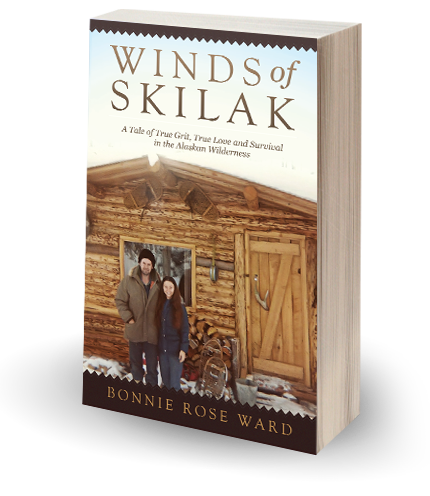
Over the course of a year, Sandy Tritt, Rhonda Browning White, and I diligently worked on my book. Not only do those ladies go above and beyond—trust me, they do–but through it all, they made it fun and easy, they taught me so much, and they did it all without changing my story or my unique writing style. Besides hiring a good editor—and I advise that you do so because it’s hard to see all of your own mistakes or to look at your work objectively—I also can’t stress enough the importance that you, the author, must take full responsibility to see that your manuscript is in top-notch shape and the best it can be before you consider publishing. That means working with your editor, revising, proofing, proofing, and proofing some more. Some of you may be thinking, “But I want to publish my book now.” So did I, but I’m glad I didn’t rush into it. Be patient and do what you’ve got to do to get it right. In the end, you will have something you can be proud of. Winds of Skilak has won two book awards and today sits on Amazon’s Best Seller List in two categories, and has received rave reviews. I attribute my success to Inspiration for Writers, Inc. I have learned my lesson well and when my next book is written, I will save myself a whole lot of money, time, heartache and grief—I will make a beeline straight to Inspiration for Writers, Inc.

Publishing

I had often heard that once your book is written and ready for publication, you’ve only fought half the battle. I didn’t want to believe that. Actually, I didn’t believe it. However, once again, I realized I was wrong. No surprise there! I now had the daunting task before me of trying to publish and market my book. So many questions ricocheted in my mind. How do I publish? Who do I publish with? Do I try to find a traditional publishing company or do I self-publish? That was an easy answer for me. Having already run the gauntlet of submitting queries and proposals only to get rejections, I decided to self-publish. Now, that’s my personal choice. I’m not advocating that everyone should self-publish. For me, it was right. And again, you have to be proactive—it’s your baby and nobody cares about it more than you. There are many publishers out there, so you have to do your homework. In all honesty, I started searching my publishing options long before typing “The End” on my book. Once I made my choice and paid for my publishing package, I still had a lot of work to do. Don’t think for one moment that if you go with a self-publishing company, your struggles are over. I returned my manuscript many times to the publisher because of their formatting errors. I had to work to make sure they got it right. But, the day I held my baby in my hands, all the labor pains and hard work of giving birth to my story was replaced with indescribable joy!

Marketing

The first step in marketing is to find your target audience. Believing your book will appeal to everyone is a big mistake. You need to define who will likely purchase your book, and then figure out how to reach those specific people. Where do they hang out? What magazines do they read? For instance, if your book is about hunting or camping or outdoor activities, you might see if you can put your books in a sporting goods store, or perhaps write an article or put an advertisement in a hunting or outdoor sports magazine. I recommend using social media, like Facebook (my favorite), Twitter, and Pinterest, just to name a few. Start a website and/or blog and engage your members, keep them motivated. Look for online magazines and blogs that appeal to your target audience and see if they will hold a book giveaway or give you an interview. Advertise in newspapers. And don’t hesitate to ask for reviews. Reviews are an author’s best friend and they do make a difference. Just remember, you can’t sit back and expect your books to fly off the shelves all by themselves. It takes work on your part. And, last but not least, if you have a well-written book with a great story, word of mouth will be your best advertisement of all.

It has been a pleasure sharing my experience as a first-time author with you, and it is my hope that some of the information I have provided here can be of some help—and for you new authors or soon-to-be authors out there, I wish you the very best on your journey to making your writing dreams come true.

Bonnie Rose Ward

Award-Winning Author of Winds of Skilak: A Tale of True Grit, True Love and Survival in the Alaskan Wilderness. After fifteen years as a “wilderness wife” in Alaska, award-winning author Bonnie Rose Ward now resides with her husband on their farm in central West Virginia. They still maintain a self-sufficient lifestyle, raising goats, chickens, and other barnyard animals, with four dogs and a peacock named George rounding out the menagerie. Bonnie enjoys canning vegetables from the huge gardens sowed by her husband with heirloom open-pollinated seeds, and in her “spare” time, she continues to write her memoirs of the Alaskan wilderness.


Spaghetti Trap

by
Charlotte Firbank-King

You’ve probably heard the term Spaghetti Western. It’s a sub-genre of western movies that reared its head in in the 1960s whose main aim was to imitate what was already a successful genre. They were low-budget movies using unknown actors produced and directed by Italians. The movies were mightily slated by critics in the US, England, and Europe. In fact, an Italian critic first coined the phrase Spaghetti Western. Then A Fistful of Dollars became a box office hit and it was a free for all; everyone in the industry was in on the action.

The same can be said for romance novels. Scholars have made a study of the romance genre, and authors like Jane Austen, Georgette Heyer and Samuel Richardson, among others, are seen as the forerunners of romance. In the 1930s, British publisher Mills and Boon started churning out escapist, feel-good books with happy endings aimed at women. They had to be tasteful and chaste with wilting virgins and hunky men.

Barbara Cartland started her writing career in 1901 with a risqué novel, Jigsaw, which became a bestseller. She is still considered the most prolific romance writer of all time. She produced over 700 novels, writing 23 books in one year, for which she holds the Guinness World Record. Georgette Heyer accused her of plagiarism—an accusation the high-flying society gal, Barbara, managed to field with her team of lawyers. Her work naturally deteriorated and became what can only be called Spaghetti Romance.

My point is that millions of authors have followed in her footsteps with varying degrees of success, but mostly failure. With the advent of Kindle, badly written books have escalated the spaghetti trend. The Twilight saga set off a spate of vampire books and movies, and Fifty Shades of Grey has put erotica on a new high with no holds barred.

My question is, are there no original authors out there? I write romance, but I’m almost embarrassed to admit it. Years ago, when I decided that I enjoyed writing romance, a publisher told me to read as much as possible in the genre I’d chosen. I spent an unhappy year reading thousands of romance novels. At the end of this year of penance, all I knew was that I didn’t want to write like that.

I urge every aspiring writer to read as many books as they can in the genre of their choice—then think laterally and be original. Don’t fall into the spaghetti trap.

An Interview with Literary Agent Joyce Hart

by
Sandi Rog and Joyce Hart

Ever wonder what goes on behind the scenes of publishing? Most big houses these days require an agent. This means, in order to get your manuscript onto a publisher’s desk, an agent has to see if first, and it’s the agent who (if they like your work or think it’s marketable) will send it on through those mighty publishing doors.

So, what exactly does an agent do?

Today, please welcome Joyce Hart from Hartline Literary Agency.

Joyce has been a literary agent since 1992. She was formerly the vice president of marketing of an inspirational publishing company, and, as the president of Hartline Marketing, has nearly thirty-five years of successful experience marketing (here is a great site suggested by her to all those who need marketing services) and promoting books. Joyce has been a pioneer in selling high quality fiction to the inspirational market and has built an excellent rapport with leading inspirational publishers. A member of ACFW (American Christian Fiction Writers), Joyce is a graduate of Open Bible College, Des Moines, IA now merged with New Hope College in Eugene, Oregon. Joyce is based at Hartline Literary’s Pittsburgh headquarters.

Joyce, we are honored to have you as our guest for an interview. Thank you for taking time out of your busy day to share your knowledge with us.

Sandi: How do you define your job as an agent?

Joyce: We want to help our clients develop their careers. We hope when we sign with someone it’s for a long term relationship. One of my clients has been with me for 22 years and several have been with us for 10 or more years. I also see myself as an encourager. When the author gets discouraged about rejections, etc., I remind them of what a good writer they are. This is a tough business, especially in the last few years.

Sandi: How has the business gotten “tough” over the last few years?

Joyce: There have been so many changes in the publishers. B & H closed their fiction line, now Harlequin has closed the Heartsong line, Harper Collins owns both Zondervan & Thomas Nelson, so their fiction is now Harper Collins Christian Fiction, thus there are less slots for fiction titles. Those are a few examples in the fiction market. In both fiction & non-fiction, platform is essential, good sales numbers for past titles are essential. With one publisher, they used to be happy with 5,000 in sales, now they want 20,000 in sales for each title.

Sandi: Wow. You’re right. Getting published has gotten more difficult. You mentioned something about “platform.” Can you share with us what that is?

Joyce: Platform used to mean you had to be out speaking and were well-known. Now platform also means you are on social media in addition to speaking, etc. Are you blogging, do you have a web site, are you on Facebook, Twitter, Pinterest and others as they become popular? You will be expected to do a blog tour once you get published. One publisher turned down one of our clients because she hadn’t been on her blog for 3 months. Interviews on other blogs are important too. Wherever you can get your name out there is important.

Sandi: Wow. When is the writer supposed to find time to write when they have to be involved with so much social media? You don’t have to answer that. There are a lot of expectations on writers these days.

Can you share with us how you spend your day?

Joyce: Reading and answering-mails, sending out proposals, learning new things about this ever changing business, doing my best to keep up with trends. I usually do my reading evenings and weekends.

Sandi: How do you find new clients?

Joyce: We receive many queries via e-mail, most of which we reject. The best ways are either to meet an author at a conference or by referrals.

Sandi: What do you like to see in a cover letter?

Joyce: A short summary of the book, the author’s bio and publishing history, and how the author plans to market the book.

Sandi: What turns you off in cover letters? Any pet peeves?

Joyce: The ones that say “this will be your next bestselling book” and the ones that tell us that God told them we would be their agent. I don’t mind people saying that, but for some reason they keep coming back to our agency. Maybe God has led them to us, and not always necessarily to be their agent, but to give them some solid advice.

Sandi: How savvy do you expect authors to be about publishing?

Joyce: It really helps if they know publishing. I prefer prospects to have been to writer’s conferences and to have taken online courses. If they write [Christian] fiction, it’s good for them to join ACFW [American Christian Fiction Writers] because of their many online resources. They need to know how to prepare a proposal.

Sandi: How flawless does a manuscript have to be before you will try to place it?

Joyce: It doesn’t have to be ready to go to the publisher. We’re willing to work with an author. We probably will suggest that they hire an editor. Most publishers want to see manuscripts that have been edited these days. Of course, there are always exceptions.

Sandi: What impresses you most about a piece of writing?

Joyce: Stellar writing, something that blows me away, whether non-fiction or fiction.

Sandi: What do you want from the writing itself?

Joyce: As in the previous question, something that blows me away. In fiction, something that touches me emotionally and keeps my interest. In non-fiction, I want writing that keeps me reading. Non-fiction needs to be accurate both with any kind of facts and theologically.

Sandi: Are first novels a hard sell?

Joyce: Extremely hard to sell these days. The publishers want an over-the-top platform.

Sandi: Are second novels a hard sell?

Joyce: It depends on how the sales of the first one were. It’s all about sales these days.

Sandi: Do you submit to an editor, or to a house? What’s the difference?

Joyce: For the most part we submit to an editor. This business works on relationships.

Sandi: How would the sale of a publishing house affect you as an agent?

Joyce: It would depend. Sometimes they close out an entire line, such as the sale of Harlequin to Harper Collins and Heartsong was closed, and the editor lost her job. That’s tough, our agency had at least three authors who wrote for Heartsong.

Sandi: Finally, what do you enjoy most about being an agent?

Joyce: I enjoy the interaction with the authors and editors. Authors and editors both become good friends. I love books and I love reading our clients’ books. I love finding talented new authors and helping them develop their careers. I simply love what I do. When I started working for a Christian Publisher (Whitaker House) years ago, I found my niche in life. God is good, and I thank Him for leading me to work in Christian publishing.

Joyce again, thank you so much for stopping by and sharing your knowledge and expertize with us. This is has been very helpful and enlightening.

If you’d like to get to know Joyce better, and have a look at her submission guidelines, you can find her both on her BLOG and her WEBSITE.